
Let's be clear: This is not a red issue or a blue issue. As Americans approach the 2026 midterm elections, border security should be judged not simply by the number of crossings prevented or deportations carried out, but by whether the United States is building a durable strategy to protect its citizens, strengthen its alliances, and confront the transnational threats that increasingly cross national boundaries.
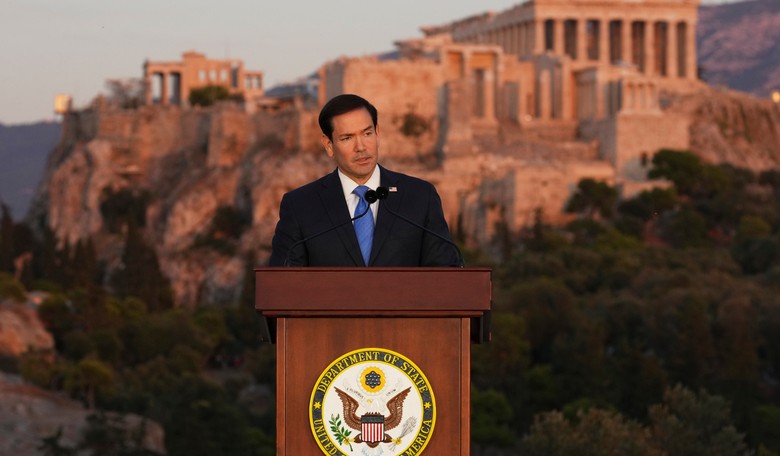
Former Homeland Security Sec. Kristi Noem’s leadership on border control and Secretary of State Marco Rubio’s stewardship of American foreign policy offer an opportunity to move beyond the immediate politics of immigration toward a broader hemispheric security framework.
Let's be clearer: The proven Shield of the Americas concept can help turn that opportunity into a lasting policy commitment.
The central question facing voters today is not whether border enforcement matters. It plainly does. The question is whether the progress achieved through enforcement will become the foundation for a more comprehensive approach to national and economic security, or remain vulnerable to the political and administrative winds of change that follow each election.
Border security is the beginning, not the end.
Effective border control requires physical enforcement, modern surveillance, intelligence sharing, competent personnel, and a functioning immigration system. It also requires cooperation with neighboring governments to disrupt the criminal organizations that exploit weak institutions, move illicit goods and traffic people across borders.
Noem’s role in advancing the administration’s border-security agenda underscores the importance of execution, accountability and sustained federal attention.
But enforcement at the border cannot, by itself, dismantle the networks that finance, supply and direct transnational criminal organizations. Those networks operate across jurisdictions, use sophisticated financial channels and adapt quickly when authorities disrupt one route.
A durable strategy must therefore connect border operations with investigations into criminal financing, maritime security, information sharing and coordinated action against trafficking and smuggling. It must also distinguish legitimate migration and commerce from criminal activity, protecting the rule of law without unnecessarily obstructing lawful travel and trade.
The objective should be measurable security improvements, not simply impressive announcements.
Rubio’s stewardship provides the diplomatic dimension.
The United States cannot secure the Western Hemisphere through domestic enforcement alone. Its security depends, in part, on the willingness and capacity of partner governments to cooperate against shared threats.
Rubio’s stewardship of American diplomacy creates an opportunity to make security cooperation a more central component of U.S. engagement with Latin America and the Caribbean. Intelligence exchanges, coordinated law enforcement, stronger maritime monitoring, and targeted support for institutional capacity can make it more difficult for criminal organizations to exploit national borders and political divisions.
This approach also recognizes that security and economic development are interconnected.
Reliable infrastructure, transparent institutions, and legitimate commercial opportunities can help countries resist corruption and reduce the vulnerabilities that criminal networks exploit. Critical minerals, energy systems, ports, telecommunications, and digital infrastructure deserve attention alongside traditional defense priorities because disruptions in these sectors can carry consequences well beyond a single country.
Partnership must, however, mean more than asking neighboring governments to carry a greater share of the burden. Washington must demonstrate consistency, respect legitimate national interests, and offer practical cooperation that produces benefits on both sides of the border.
Shield of the Americas should build on that foundation.
A Shield of the Americas framework offers a model methodology to connect border enforcement with a wider strategy for hemispheric security.
Its potential lies in treating transnational crime, intelligence cooperation, economic security, critical infrastructure and foreign influence as interconnected challenges rather than separate policy files.
That does not require every participating nation to adopt identical policies or surrender its sovereignty. It requires agreement on shared threats, clearer channels for cooperation and practical mechanisms for responding when those threats emerge.
Such a framework should begin with defined objectives: improving intelligence sharing, disrupting trafficking networks, strengthening maritime and border monitoring, protecting critical infrastructure, and establishing transparent measures of progress. It should also establish clear lines of responsibility so governments can determine whether commitments are being met.
Congressional oversight, regular reporting, and independent assessments would help distinguish meaningful results from political messaging. These safeguards would strengthen the initiative, not weaken it, by demonstrating that public resources are producing tangible security benefits.
And yet, we know that our midterm elections inevitably turn national security into a political argument.
Candidates will debate immigration enforcement, federal spending, executive authority, and America's role abroad. Those are legitimate questions, but the country would be poorly served if the debate reduced hemispheric security to a referendum on individual personalities.
Noem's reassignment as special envoy for the Shield of the Americas makes the institutional question especially relevant. Her border-enforcement experience can inform a broader mission, while Rubio's diplomatic stewardship can help translate security priorities into durable international partnerships.
The administration announced the Shield initiative in March, and Rubio subsequently addressed its participating governments at the United Nations in September. These developments provide a foundation on which policymakers can build.
The midterms should therefore encourage candidates to explain how they would preserve effective border enforcement, maintain congressional oversight, strengthen cooperation with regional partners, and measure results over time. Voters deserve more than promises of tougher policies; they deserve a credible explanation of how those policies will make communities safer.
The United States has a strategic interest in ensuring that border security is not a temporary political campaign but a sustained national priority. The Shield of the Americas offers an opportunity to connect domestic enforcement with a broader vision of regional stability, economic resilience, and shared responsibility.
The 2026 midterms are also an opportunity to demand continuity. Securing America's borders is essential, but securing the hemisphere requires more: capable partners, credible diplomacy, accountable institutions, and a strategy that recognizes how threats evolve across borders.
The goal should not be to preserve any one official's legacy. It should be to build a system that protects Americans regardless of who controls Congress or which political arguments dominate the next election.
That is the real test of leadership, and the standard by which a hemispheric security strategy should ultimately be judged.