
Washington has a strange habit. It treats the companies that fly us all over the world as too dangerous to trust, and the companies that decide what we are allowed to say as too sophisticated to restrain. Airlines struggle to live under massive regulations and federal rules. Big Tech lives under a legal shield written for the dial-up era. If Silicon Valley can “self-police,” why can’t the airlines? The honest answer is that they can’t, and neither can the platforms that spent the last decade proving they would rather try to influence politics than protect free speech.
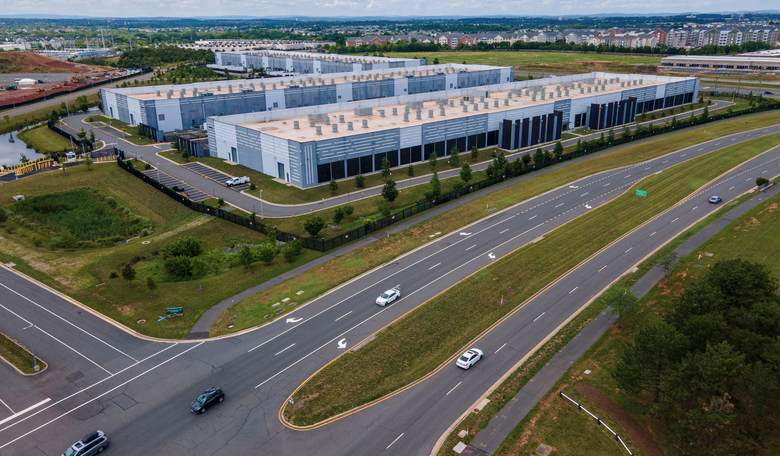
Electrical engineers almost always like machines that solve problems, even AI/SI using huge networks of data centers. Some of us welcome the coming wave of artificial intelligence and what President Trump now calls superintelligence. And America should build more distributed power plants, more grid lines, networks, and the associated computing capacity to win the race to be number 1. But that is not the same thing as handing the companies that will own those systems a blank check over our First Amendment rights.
Airlines are over-regulated in ways that drive up costs and slow needed innovation. Safety matters, but so does common sense. Pilots, mechanics, and engineers already live with checklists, inspections, and liability. The public does not want a plane that “self-moderates” mid-flight. We want a plane that flies safely.
Anyone who has spent too much time waiting in TSA lines knows that government systems are slow, inefficient, and hard to change even when their mission is legitimate. If superintelligent systems can eventually help us solve many lingering problems in fractions of a second, why shouldn't SI also help private companies handle security, screening, compliance, and other processes that could be faster and more efficient than the current government bureaucracy?
Contrast that with social media. For years, the largest platforms insisted they were mere bulletin boards when the lawsuits arrived and publishers when the advertisers arrived. They throttled stories, banned accounts, and called it community standards. Big Tech's cancel culture was the political goal, not a glitch.
Section 230 of the Communications Decency Act made that double game possible. In 1996, the deal was straightforward. Host user speech and you will not be treated as the author of every post. Moderate illegal filth in good faith and you will not be punished for trying. That bargain helped the internet grow. It also helped a handful of firms become some of the most powerful corporations on earth. They no longer merely host speech. They rank it, bury it, monetize it, and feed it through algorithms designed to keep people scrolling. Then they hide behind a statute written for chat rooms.
Superintelligence, and eventually systems far more capable than today’s chatbots, will sit on top of those same feeds. What happens when SI, not a junior trust-and-safety officer, decides which voices travel and which vanish? Will the machines inherit the old biases, or invent new ones on an industrial scale? And if the model hallucinates, defames, or quietly smothers a political movement, will Section 230 still let the company walk away from civil court? A law meant to protect a fledgling web should not become a lifetime pass for trillion-dollar cash-rich firms when their software, not a random user, is doing the editing and picking winners.
President Trump captured the contradiction better than most. During the campaign, he called many of these executives fake and dumb. After they entered the White House SI Situation Room, he called them the smartest people in America. Both statements can be true in different senses. People can be brilliant at building products or creating art but foolish about a great country. Many of them spent years campaigning, donating, and moderating against MAGA, then discovered that the voters they muted were still there. Elon Musk and a few others broke from the pack. The rest discovered, late, that political fashion is not the same thing as engineering talent.
That is why the “self-police” argument fails. These firms have already tried it. They coordinated with activists, fact-checkers, and government offices. They decided which pandemic claims were allowed, which election stories were “misinformation,” and which sitting president could keep an account. The public saw the results. Trust collapsed. Alternative platforms grew. Congress held hearings. None of that requires hating technology. It requires noticing that speech is not a flight-control system.
The remedy for a bad idea is a better idea, not a secret ranking formula.
So here is the choice. Welcome the buildout. Let data centers rise. Let American companies compete to invent the next generation of machines. At the same time, stop pretending the legal rules of 1996 fit the gatekeepers of 2026.
Shaun McCutcheon is a free speech advocate, an Alabama-based electrical engineer, the founder of Multipolar, and the successful plaintiff in the 2014 Supreme Court case McCutcheon v. FEC.