
As concerns about the cost and availability of energy have increased among American consumers, Democrats in the House and Senate have stepped up efforts to block Republican legislative initiatives to address these concerns.
Following weeks of energy permitting reform negotiations between Senate Republicans and Democrats, as well as the Trump administration, negotiations have broken down and may be difficult to revive during an anticipated lame-duck session following the 2026 congressional elections.
The American Energy and Mineral Infrastructure Act of 2026 would address the growing gap between America's surging energy demand and outdated infrastructure. This legislation streamlines federal permitting procedures, reduces unnecessary litigation, ensures consistent evidence-based environmental decision-making, and prevents political vetoes by one state of a federally approved and permitted project.
China dominates as the global manufacturing superpower because of its rapid ability to scale infrastructure, and they now generate more than double the electricity of the United States. Due to our current permitting process and associated litigation, more than 4,000 miles of pipeline projects to expand capacity and meet growing demand are on hold because of costs, time and litigation risk tied to uncertainty.
Despite proposed White House concessions, including unfreezing wind and solar projects, Democrats have been unwilling to get to "yea," and the reform legislation remains stuck in the Senate.
A similar scenario is holding up Senate approval of the Ratepayer Protection Act — a bill that passed in the House, 417-3. When the Senate sponsor, Jon Husted, R-Ohio, sought to pass it by unanimous consent, Sen. Martin Heinrich, D-N.M., blocked its consideration.
The Ratepayer Protection Act would require state public utility commissions to consider a strategy to make data centers pay their own way, instead of passing costs onto consumers.
While Republicans have 53 seats in the Senate, their rules require 60 votes to consider most legislation. Unless at least seven Democrats allow consideration of this taxpayer protection measure, the overwhelming House support will be squandered by the politically motivated actions of Senate Democrats.
House Democrat leaders have also played hardball in seeking to block Republican-sponsored measures with bipartisan support from being considered.
Following the Senate's 86-11 vote to pass the Lindsey O. Graham Sanctioning Russia and Iran Act of 2026, House Democratic leaders were furious when two Democrats voted for the procedural rule that allowed the bill to proceed and pass by a vote of 262-159.
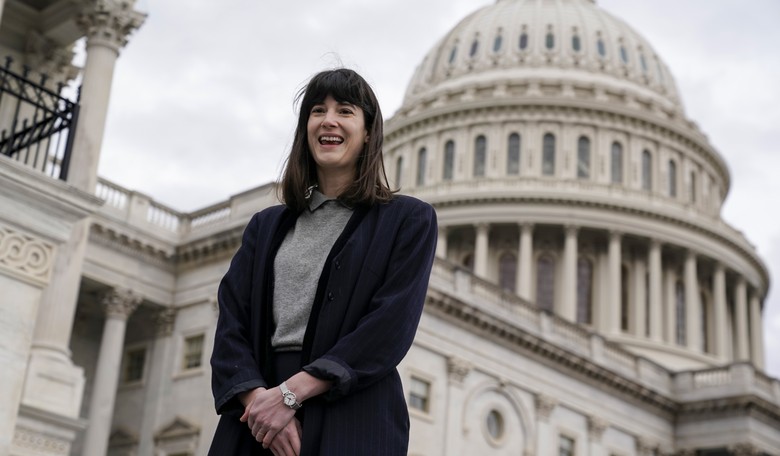
Spokesman for Rep. Jared Golden, D-Maine, said the congressman "didn't want to see the Russia sanctions bill die in a rule vote after passing with overwhelming bipartisan support in the Senate." Rep. Marie Gluesenkamp Perez, D-Wash., said her vote "gets us one step closer to enacting these sanctions into law" and she looked forward to voting to "cut off the flow of Russian oil money" fueling their war against Ukraine.
Despite this principled stand by these two members, House Minority Leader Hakeem Jeffries called their action a "significant breach of trust" that requires a "serious response."
In addition to the human suffering and destruction of critical infrastructure that has been caused by Russia's war against Ukraine, it has also contributed to elevated fuel prices and grain shortages that have hurt the American economy.
Democratic congressional leaders should put power hunger and obstruction aside and join their Republican colleagues in doing what is best for American consumers to help reduce costs and our dependency on regimes that seek to harm the American people.
But it is an election year. And since most voters get their news from Democratic-controlled corporate media sources, very few have probably heard about the wonderful work Republicans in Congress have been doing to lower the high prices of gas and groceries.
There's a reason the most successful salespeople in the world are known for their shoe leather.
Star Parker is founder of the Center for Urban Renewal and Education and author of "Necessary Noise, How Donald Trump Inflames the Culture War and Why this is Good News for America" (Hachette 2019).