
James Carville recently said of the progressive left: “I think they’ve come up with an AI random stupid idea generator.” He might be onto something, and ahead of the midterms, the generator seems to be running on its own output, with the ideas getting worse and more alike.
Democrat candidates across the country are proposing a bevy of bad and destructive economic policies which promise to vastly increase state control over the economy.
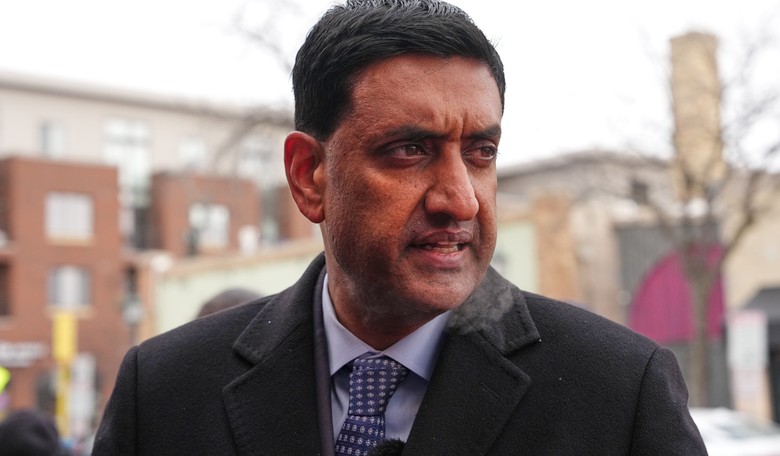
These ideas aren’t limited to candidates who are members of the Democratic Socialists of America (DSA); growing numbers of incumbent members of Congress openly advocate for statist, far-left ideas. Enter Representative Ro Khanna.
Khanna is a major proponent of the California ballot proposal to levy a 5 percent one-time wealth tax on all billionaires. He’s previously gone further on this idea by introducing a bill that would impose the 5 percent wealth tax annually, something for which he was torn to shreds by Mark Cuban.
Remarkably, the wealth tax was just one out of a litany of ridiculous ideas that Khanna has recently advocated. Khanna recently released a 14-point plan to “rebuild America”. The throughlines across all these policies are what many Americans despise about radical leftists: economic illiteracy, opaqueness when pressed for details, and an abandonment of the very liberty and freedom that make this country uniquely great.
Higher Taxes and Lower Production
Ro Khanna’s first instinct is to punish success and wealth creation. The billionaire tax he and Bernie Sanders have championed would suppress innovation and further drive entrepreneurs out of Khanna’s state.
People who create new businesses often invest everything they own in their venture, and any early profits it generates are reinvested in the enterprise to fund growth, expand hiring, and serve more customers. The founders’ wealth is tied up in expanding the companies they created to serve others.
His proposed tax would force founders to divert money that would otherwise fund growth or sell off pieces of the very business they built. Pressed on this, Khanna suggested they could pledge shares to the government as collateral or find capital elsewhere.
But during exchanges with founders, including Palmer Luckey, Khanna’s ignorance became increasingly clear — he had not thought through the mechanics or consequences of his own proposal.
Khanna also introduced the reckless economic policy proposal of a $25 federal minimum wage. As with rent control and many other policies socialists advocate, the minimum wage often hurts the very people they are supposed to help.
Nearly 80 percent of the estimates in published studies since 1992 point toward reduced employment following minimum-wage hikes, with the strongest evidence of harm concentrated among the lowest-wage workers. The CBO has projected that a $17 federal minimum wage would result in 700,000 lost jobs. Khanna’s proposal would set the minimum wage nearly 50 percent higher than what was evaluated in that study, meaning job losses would be much worse.
Khanna has also proposed sweeping policies to tax all generated AI tokens and chill the construction of new data centers. While apparently being an avid user of AI, Khanna does not realize that the AI boom is a boon for Americans, creating hundreds of thousands of new construction jobs while driving more than 1.5 percent of U.S. economic activity. And contrary to Khanna’s narrative, data centers are great for the communities where they are built. Loudoun County, Virginia, for example, has the most data centers in the U.S. and the fastest-growing employment level of all Virginia counties in 2025, while being able to lower property taxes for its residents.
Khanna’s idea of a housing guarantee will dramatically raise home prices, inflating demand while we face a multi-million-unit housing supply shortage driven by excess regulations stopping construction. He essentially wants to recreate the conditions of the Great Recession, where tens of millions of borrowers with little or no equity in homes will lead to mass foreclosures, vacancies, and slum-like conditions in American cities.
Reduced quality also applies to his “Medicare for All”. A government takeover of healthcare would stifle the incentive for medical innovation and result in Americans seeing the type of healthcare rationing and long wait times characteristic of countries with socialized medicine.
The price tag for many of his ideas won’t be covered by taxing the rich. A CBO 2022 estimate found that net federal healthcare spending would rise between $1.5 trillion and $3.0 trillion annually by 2030. For reference, the federal government collects $2.6 trillion in total income taxes every year. Likewise, his student loan forgiveness and free college tuition proposals would cost trillions. That means a massive tax increase on working families who are already financially stressed from the inflation that Khanna and his party have caused.
Khanna’s policies will lower both current and future living standards, make the quality of goods and services worse, dramatically raise prices, squeeze household budgets from large tax increases, and burden hard-working American families the most.
A Record of Failure and Cronyism
But let’s just assume for a moment that these ideas on paper are beyond reproach; they aren’t economically absurd or devoid of actual specifics. Khanna’s record shows that he is not someone to take seriously when he tells you he is fighting for the American people.
Khanna wants one set of rules for himself and his friends, and another for everyone else. This applies both to the 5 percent wealth tax — David Friedberg has publicly called for Khanna to embrace his own policy, given his reported net worth of $200 million — and to congressional stock trading, which Khanna wants to ban. The Khanna household is one of the most active trading households in Congress, placing trades on 244 of the 250 trading days last year and averaging 22 trades per day. He also hand-delivers his 353 pages of financial disclosures, making the documents difficult to index and search. Fortunately, Kane Hsieh created rokhanna.money, where you can track the household’s day-trading activities, its holdings, and the reported $150 million net worth of Khanna’s elementary school-age dependents.
Khanna talks about affordability but has consistently backed upholding the Affordable Care Act, which caused healthcare premiums to skyrocket. Khanna was a major supporter of the misnamed Inflation Reduction Act, taking credit for one of the most inflation-inducing provisions in the bill: hundreds of billions in climate subsidies for his cronies.
Perhaps most tellingly, Khanna remained one of the most loyal supporters of President Biden while his administration sanctioned a mass illegal migration surge into the country, which undercut American wages and drove up home prices. Incredibly, during the peak of the border crisis, Khanna suggested advancing a mass amnesty program to permanently codify the Biden-era wave.
Khanna may claim to care about the pocketbooks of Americans, but a cursory glance at publicly available records – whether it’s his publicly disclosed trades or his votes in Congress- reveals that what he really wants is socialism for thee, cronyism for me.
The Trump Administration is Delivering
Finally, each of Khanna’s 14 points is confirmation that progressives oppose substantive progress. President Trump and the Republican Party have enacted policies that have already yielded immediate results and will have a lasting impact. Khanna either vigorously opposed these policies or pretends we all live in a world where they never happened.
Ro Khanna voted against the Tax Cuts and Jobs Act in the first Trump term and then the Working Families Tax Cuts in the 2nd term, which together more than doubled the tax credit from $1,000 to $2,200, and extended these benefits to millions of families who previously didn’t qualify.
The WFTC gave a major boost to technical education by expanding workforce Pell Grants and 529 private accounts to cover short-term training programs.
As a result of innovative actions such as TrumpRx and most-favored-nation drug pricing, prescription drug prices recorded their largest decline in more than 60 years.
On new data centers, President Trump’s Ratepayer Protection Pledge ensures data centers pay for power and create new jobs.
Each of these substantive accomplishments didn’t require trillions in new taxes or a massive government takeover of the economy. They required common-sense, America First policies that incentivize innovation and domestic production.
Continued progress requires an unwavering commitment to entrusting the American people with the economic liberty and freedom that have propelled our Nation to achieve unparalleled innovation, prosperity, security, and growth.
Representative Ro Khanna and progressives like him instead want to draw from the tired playbook of socialist ideas that have never worked and never will. The differences in economic philosophies between America First patriots and progressive socialists have not been starker in decades. That is the choice confronting the American people this November.
Mr. Faulkender is a Senior Advisor to America First Works. He served as deputy Treasury secretary (2025).