
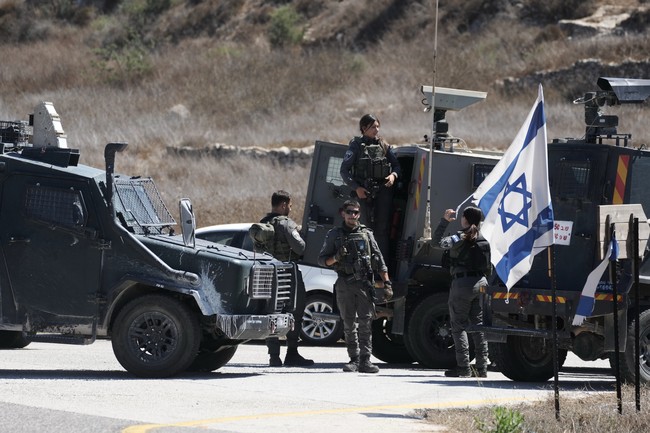
I just heard a heartbreaking interview on national radio with Talia Shakron, daughter of Netanel Shakron, an Israeli Jew who was murdered by a Palestinian Arab terrorist on Sunday. There are many things noteworthy about this that need to be shared. First and foremost is prayers for the Shakron family, that they will have strength and be comforted at this terrible time of grief.
In Jewish tradition, burial takes place as soon as possible after death, even at 11:00 PM as Talia’s father, Netanel, had been the night before. The only reason Netanel was not buried a day earlier is because Sunday night and Monday were Yom Kippur. We don’t do burials on Yom Kippur, Shabbat, or other Biblical festivals. That’s also part of the story.
At the time of the interview, the top of the 9:00 AM news, Talia had just buried her father 10 hours earlier. Yet there she was, obviously grieving, composed, and already comforted by the knowledge that her father was in God’s divine arms. I never like it when Israeli media interview first degree family members of victims of a terror attack. It’s a time for comforting the family, not putting them in the spotlight. But it also has to happen, I get it. And anyone is free to decline to be interviewed. Still, I don’t like it.
When asked in the closing moment of the interview how she and her five siblings and mother would get along now with her father gone, Talia said simply, “we will keep his tradition.”
Without a doubt, Netanel Shakron’s tradition is one worth keeping, and he was a role model for his children and all of us. He awoke Sunday morning and took his teenage son Yoav to a nearby natural spring in the Samaritan mountains where they lived. This was not a recreational trip to play in a pool. It was a spiritual experience, to immerse themselves in the natural waters and purify themselves ritually before taking a bigger plunge to stand before God that very night and beseech His forgiveness, to repent for the sins and shortcomings of the previous year, with a pure heart.
The only thing is that Netanel’s son Yoav made it home and had to stand before God alone on Yom Kippur, without his father, not just in contrite prayer — if he was even able to do that — but while grieving his father who just a few hours earlier, as all reports have indicated, had saved his life.
That’s the other tradition worth keeping: that his last act was to save his son’s life. As the father of six and grandfather of five (so far), there’s nothing I would not do to save my family. As he began his day, Netanel ended his life, sanctifying God. Netanel was 36.
Sunday morning another man woke up deciding also that he was going to do something to sanctify his god. Qadri Samara is 37. He is a Muslim Palestinian Arab terrorist affiliated with Hamas. He may also be a father. I don’t know, and personally I don’t care. But assuming he is, when he woke up that day and decided in what appears to have been a premeditated incident, that he was going to go to the natural spring and kill Israelis on the eve of Yom Kippur, he knew very well what he was doing. It seems he was armed with an M-16, and more hatred than any bullets in the magazine.
He also knew that either way — dead or alive — by his vile act of hatred and murder he would be considered a martyr, a hero, among Palestinian Arabs. He was shot by an alert soldier nearby and captured a few hours later. He may become the first Palestinian Arab terrorist to face the death penalty in Israel. But dead or alive, he and his family — including any children he has — will receive a pension from the Palestinian Authority as part of their Pay to Slay program, that will leave them financially comfortable indefinitely.
Assuming Samara has children, this is the legacy, the tradition, that he has left them. A tradition of hate, a tradition of violence, a tradition that rather than approaching God with contrite sincerity and prayer, he sanctified his god by killing another human being. Samara’s god receives and celebrates sacrifices of dead Jews. That’s the tradition he inherited, and he has passed along to his children.
Yoav was right next to his father when he was fatally shot. Fortunately, the alert soldier disabled the terrorist, and the quick-thinking loving father had told his son to run. At his father’s funeral, Yoav Shakron paid tribute to and eulogized his father, expressing his deep gratitude. “Dad, I want to thank you. Thank you for all the years we spent together. Thank you for shouting at me during the attack and telling me to run — thank you for saving my life. I also want to thank God for sparing me. To mom and my siblings, I want to say: we will continue to stay strong and stand together.”
Last night just before going to bed, there was some loud noise from the Palestinian Arab village outside my window. I looked to see a number of cars, burning their tires and honking the horns. Were they just crazy young guys out for fun? Were they creating a distraction for a more widespread terrorist attack? Were they “just” celebrating the murder of Netanel Shakron at the very hour he was being buried by his family? All of the above?
Between us there is security, but among them there is rampant hatred enough to fuel many more attacks like Samara’s. The school adjacent to the place where the cars were making the noise is adorned with a portrait of the Palestinian Arabs’ most famous and celebrated terrorist — Yasser Arafat.
As the Shakron family — and we all — grieve Netanel’s death and take comfort in the tradition he lived until his very last moments, Samara’s family will celebrate his vile act of terror — all the way to the bank.
Some will say, “What about settler violence,” or “blah blah blah… illegal settlements” and throw in “obstacle to peace” for spice, along with tropes of genocide, apartheid, and ethnic cleansing. Let’s be clear about one thing that cannot be more abundantly clear: the root cause of the violence is intolerant, extremist Islamist Palestinian Arab terror, the culture that celebrates it, the entities that fund and incite it, and the world which turns a blind eye to this reality. This is their tradition that we will continue to have to fight and defend ourselves from so a father can take his son to a natural spring — on any day for any reason — or anywhere else, without worrying about the son carrying on his father's tradition alone.