
California leftists won’t like it, but they should look to Israel for a case study on how to manage water in the desert, especially if they insist on continuing to grow water-intensive crops and allow their growing population to enjoy golf courses, lawns, and swimming pools.
I had the opportunity to visit Israel recently, and what struck me immediately was how much agriculture there was and how they did not waste much land at all, despite the very dry climate.
Israel is half desert and semi-arid, with a very pleasant Mediterranean climate in the north and along the coastline. It’s a lot like southern California, actually; both because of that climate and because they insist on planting orchards full of very thirsty plants.
In Israel, it is mangoes and watermelons. In California, there are almonds and avocados. Mangoes are tropical; they are estimated to use around 190 gallons of water per pound of fruit. California almonds require around three times as much as that per pound.
While California is in a constant state of emergency with water availability, Israel exports water. Israelis make more than they use; I cannot emphasize this enough. They have a surplus of water in the desert.
It’s not because miraculous water still flows eternally from the rock Moses struck twice with his staff.
Water is a safety issue. Water is needed desperately not just for irrigation and hydration, but also in dry seasons to prevent wildfires. Improving irrigation in neighborhoods would help prevent fires and supply the needed fire suppression when they occur. Dead grass is dangerous in fire-prone areas.
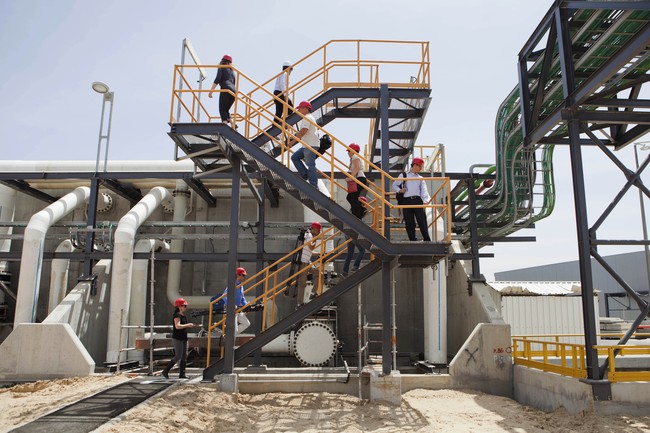
Israel is a country barely larger than New Jersey, with a population of approximately 10 million people. Yet, it has six desalination plants, which provide most of the nation’s potable water.
California has 12 plants, while being nearly 20 times larger than Israel with four times the population.
Israel’s one major river — the Jordan — has its headwaters in Lebanon and Syria, which have in the past attempted to dam and divert the flow of water to dry the Sea of Galilee. Desalination was an obvious solution. Instead of fretting over it for years and piling extra regulations on operating a plant the way California has done, Israel encouraged private companies to invest in the technology and build the plants out.
That isn’t to say that their desalination plants are unregulated. On the contrary, the government is very involved, largely because of the desperate need for the plants to remain in operation. I suppose there is really nothing like a war to move a government to improve infrastructure.
Although Gov. Newsom has recently made noises about streamlining permitting, California has one of the most intensely regulated water treatment sectors of any state. The California Environmental Quality Act is a massive barrier for any new desalination infrastructure project, piling on costs for lawyers and wasted time, just to file the paperwork correctly. Even then, for example, after 20 years in permitting timeline hell, the Huntington Beach desal project was denied. It was rejected for “environmental justice concerns” and conflicts with California’s climate obsession. It’s insanity.
The generally expected timeline for desal in California is 12-20 years from proposal to approval, all because of regulatory overburden. Compare that to the same timeline for permit review in the free state of Florida, which is a mere four years.
While California is unlikely to have the Colorado River diverted by enemies in Nevada and Arizona, it should be clear by now that it’s madness to waste water from reservoirs to save an already disappeared Delta smelt, or prioritize climate issues over the real-world impacts of happening-right-now weather conditions combined with a growing population in a naturally arid part of the country.
Desalination is not perfect: no engineering project is. Recently, an algae bloom and bad weather disrupted Israel’s plants and forced them to restrict operations. But technology exists to remove algae from seawater for desalination systems; it’s a matter of funding to get it done, which they are willing to invest in Israel.
In addition to desalination, Israel makes use of grey water and other wastewater as irrigation water for landscapes. Driving around the cities, you see those special purple water lines everywhere. Very little is wasted, but Israeli municipalities don’t find having landscaping beautifully planted with pomegranates, olive trees, and flowers a waste.
Israel is in a far better position to deal with drought than California is, and the truly amazing thing is that California’s climate-crazed government chooses to keep the state in a constant condition of water scarcity.
Linnea Lueken (llueken@heartland.org) is a research fellow with the Arthur B. Robinson Center on Climate and Environmental Policy at The Heartland Institute. X: @LinneaLueken