
President Donald Trump says he hopes the Iran War is approaching its end. Europe will certainly share that hope. Seven months of conflict have sent shockwaves through an already fragile global economy. Yet even if the guns fall silent, one brutal lesson from this war will remain. The world has allowed too much of its energy supply to depend on two narrow stretches of water.
The Strait of Hormuz has been severely disrupted since the war began in February. Now the other great artery linking the Gulf with Europe, the Bab al-Mandab Strait at the entrance to the Red Sea, has come under growing threat from the Iranian-backed Houthis. Oil has climbed above $100 a barrel. European consumers are once again discovering that wars thousands of miles away can arrive on their doorstep in the form of higher petrol prices, increased heating bills, inflation, and higher interest rates. But amid this gathering energy crisis, an unexpected player could offer part of the solution: Iraq.
Iraqi Prime Minister Ali Faleh Al Zaidi has just completed an important European tour, visiting Paris and Berlin and meeting President Emmanuel Macron and Chancellor Friedrich Merz. Energy was at the heart of the discussions. Al Zaidi’s message deserves close attention. Iraq can no longer afford to send the overwhelming majority of its crude through the Persian Gulf and the Strait of Hormuz. Neither can Europe afford to ignore the enormous reserves lying beneath Iraqi soil. Before the war, Iraq produced around four million barrels of oil every day. Baghdad now has ambitions to increase production capacity dramatically, eventually reaching between eight and 10 million barrels daily. That would place Iraq among the greatest energy powers on earth.
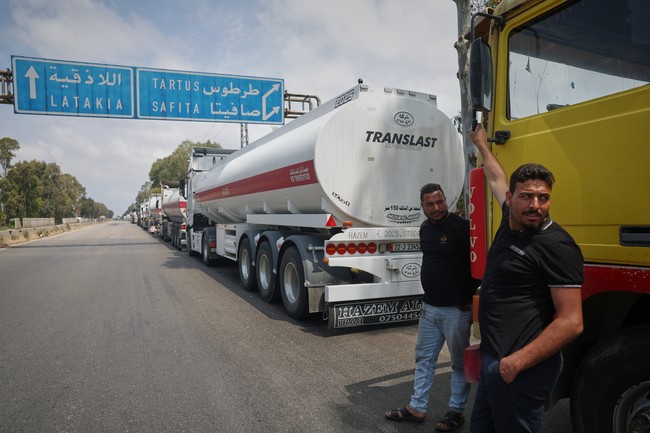
The problem is getting the oil out. For decades, Iraq’s great vulnerability has been geography. Most of its crude travels south toward Gulf terminals. Close Hormuz and Iraq, despite possessing some of the largest proven oil reserves in the world, suddenly finds itself struggling to reach its customers. Baghdad has finally grasped the strategic implications. It is developing alternative export corridors north and west toward the Mediterranean. Oil can move through Türkiye to Ceyhan. Plans are advancing to expand routes through Syria toward Baniyas. Baghdad has also examined an outlet through Jordan to Aqaba.
The objective should now be much more ambitious. Europe, the United States, and Iraq should create an energy corridor capable of carrying millions of barrels of Iraqi crude directly toward the Mediterranean, permanently bypassing Hormuz. Such a project would transform the strategic energy map. It would also come at precisely the right moment. The Houthis have advanced dramatically along Yemen’s Red Sea coast and seized strategically important territory around the Bab al-Mandab. Their growing ability to threaten shipping has become particularly dangerous because Saudi Arabia has relied increasingly on its Red Sea export route while Hormuz remains disrupted.
The nightmare scenario is obvious. Iran squeezes Hormuz while its Houthi allies threaten Bab al-Mandab. Two narrow waterways then become levers capable of exerting immense pressure on the global economy. Europe should refuse to remain hostage to this geography. Iraq offers another road. Prime Minister Al Zaidi appears to understand the opportunity. In Germany, he discussed expanding Iraqi crude exports to Europe alongside greater German investment, technology, and industrial expertise. His government signed a further energy cooperation agreement with Siemens Energy. In Paris, he met Macron and senior French industrial leaders, including TotalEnergies. This is precisely the partnership Iraq needs. Iraq possesses the oil. Europe possesses much of the capital, engineering expertise, and technology required to develop it and move it safely toward Western markets.
There are formidable obstacles. New pipelines cost billions. The Syrian route carries obvious political and security risks. The Turkish corridor requires cooperation between Baghdad, Ankara, and the Kurdistan Regional Government. Increasing Iraqi production toward 10 million barrels daily would require huge investment and negotiations within OPEC. None of these difficulties should obscure the strategic prize. Even an additional one million barrels a day reaching the Mediterranean through Iraq’s northern and western corridors could make a meaningful contribution to supply resilience. Larger volumes over time could change the equation considerably.
This should therefore become a major European strategic project. Brussels, London, Paris, Berlin, and Washington should work with Baghdad on financing, pipeline construction, security, storage facilities, pumping stations, and Mediterranean terminals. European companies should be encouraged to invest in Iraqi production, while long-term purchasing agreements could provide the commercial certainty required for massive infrastructure projects. The benefits would extend far beyond cheaper oil. Iraq remains dangerously dependent on crude revenues, which provide around 90 percent of government income. Investment tied to European technology, electricity generation, gas capture, petrochemicals, and manufacturing could help diversify the Iraqi economy while creating jobs for its rapidly growing young population.
It could also strengthen Iraq’s independence from Tehran. That may prove the greatest prize of all. For years, Iran has exercised enormous political, military, and economic influence over its neighbor. An Iraq increasingly integrated with European energy markets, connected physically to the Mediterranean, and supported by Western investment would possess far greater freedom to determine its own future. The Iran War has exposed the extraordinary vulnerability created by dependence on Hormuz. The Houthi advance has exposed the same danger at Bab al-Mandab. Europe should learn the lesson. Donald Trump may be right that this terrible war is approaching its final chapter. But peace alone will never remove the danger created by allowing hostile powers to hold the world economy hostage at maritime chokepoints. Pipelines across Iraq could provide an alternative. The oil is there. The European market is waiting. The technology exists. Now the political will must follow.
Struan Stevenson was a member of the European Parliament representing Scotland (1999–2014), president of the Parliament’s Delegation for Relations with Iraq (2009–14), and chairman of the Friends of a Free Iran Intergroup (2004–14).