
When elected officials knowingly create or fund a policy carrying a foreseeable risk, they should account for that risk on the other side of the ledger.
If officials spend a dollar on such a policy, a dollar should be accounted for to address the risks borne by innocent people.
One dollar on the policy side. One dollar on the risk side.
The ledger should balance.
Government demands accountability from the private sector. Public officials should do the same: what does a policy cost, what risks does it create, who bears them and what happens when officials get it wrong?
We should consider the experience of someone facing deportation. But we should also consider the innocent family sitting at a red light when an intoxicated driver comes toward them at nearly 80 miles per hour.
People choose whether to enter a country illegally, obey its laws and drive intoxicated.
The innocent family sitting at that red light didn't make those choices. They simply bore the consequences.
Empathy cannot have a preferred side of the ledger. Neither can accountability.
I know what the other side of the ledger looks like. Her name was Katie.
Katie was 20, visiting friends at the University of Illinois and sitting in a car stopped at a red light in Urbana.
She did not create Illinois immigration policy or choose the risks officials had accepted.
She simply went out with friends.
An intoxicated illegal immigrant who had previously been deported and was using a false identity came from behind at nearly 80 miles per hour.
Katie is now in a grave.
Officials make policy in Springfield and Washington. For my family, the consequences showed up on a roadway in Urbana.
She was my daughter.
Consider Illinois.
Illinois has spent at least $40 million on grants and administrative expenses associated with Welcoming Centers. Taxpayers should also ask how much government spending is being used to facilitate, accommodate or sustain the consequences of illegal immigration.
If government spends taxpayer money addressing the consequences of illegal immigration, where is the accounting for those who bear the risks?
Where is the money for prevention? Where is the money for enforcement? Where is the money for innocent victims?
My daughter Katie was killed because the consequences of immigration policy eventually reached a red light in Urbana.
Months later, Operation Midway Blitz was launched. The Department of Homeland Security dedicated the operation to Katie.
I reject the argument that enforcement accomplished nothing because not every person arrested was classified as a serious public-safety threat.
We do not wait for another law to be broken before deciding the first one should be enforced. We do not wait for another victim before deciding an existing violation matters. We should not have to wait for another family to lose a daughter like Katie before deciding that someone who has no legal right to remain here should be removed.
Every violation addressed is one less unresolved violation. Every dangerous person removed is a risk that may never become another victim.
We will never know the names of victims who never became victims. That is prevention.
I believe Katie would still be alive if the Biden administration, Congress and Illinois officials had done their jobs instead of allowing politics to dictate immigration enforcement, screening and cooperation.
If those responsible for enforcing the law had done what they were supposed to do, Katie would not have been violently killed on a sanctuary street in Urbana.
And that is why Operation Midway Blitz matters.
The federal government was finally identifying and removing people unlawfully present, doing what should have been done before my daughter was killed.
Now consider the other side of the ledger.
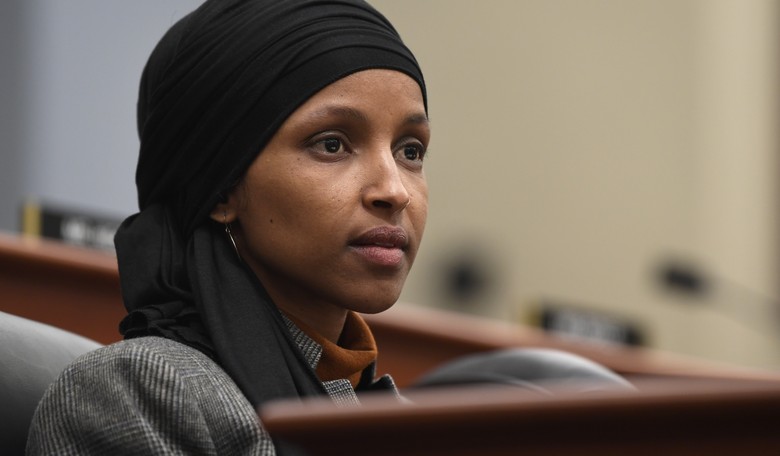
Rep. Ilhan Omar's Make ICE Pay Act would redirect nearly $140 billion allocated to ICE and CBP toward states, local governments, nonprofits and small businesses she says were harmed by federal immigration-enforcement operations. Illinois and Operation Midway Blitz are specifically included.
But what about the people who followed the rules?
What about Americans who waited their turn, followed the law and paid their taxes? What about innocent victims who suffered because immigration laws were not enforced?
Why should people who followed the rules be asked to finance benefits for people who did not, while victims absorb the costs themselves?
If government is going to identify one group as deserving compensation for the consequences of immigration policy, it has an obligation to account for everyone else who bears those consequences too.
Government cannot continually count the costs incurred by people who violate immigration laws while ignoring the costs imposed on the people who followed them.
That isn't balance.
That is a ledger with one side deliberately left blank.
This isn't an argument against legal immigration. My own family came to America legally from a developing country. Immigration and the rule of law should work together.
Government decides what laws to enforce, what risks to accept and what warnings to heed. When officials knowingly accept a foreseeable risk and an innocent person pays the price, accountability cannot end with the policy decision.
Some will say you can't put a price on human life.
Exactly.
I'm not putting a price on Katie. I'm putting a price on policy.
Instead of asking only, "How much will this policy cost?" we should also ask: What risks are we accepting? Who bears them? And who pays if we're wrong?
Katie should be 22 today. Her family is learning how to build a life around her absence.
Katie never chose the policy or accepted the risk. But she paid the price.
Policymakers must account both for those their policies help and innocent people harmed by their choices.
If officials insist on spending one side of the ledger, they must be willing to account for the other.
The ledger should balance.
Put the victims on the ledger.