
Five seemingly unrelated developments — the Supreme Court's intervention in mail-in ballot rules, a federal judge's decision affecting foreign students and journalists, the blockade threatening Saudi Arabia, an unusual alliance in Michigan politics, and the accelerating power of artificial intelligence — are testing whether American institutions can exercise authority without abandoning restraint.
Let's begin with the Supreme Court's decision concerning mail-in ballots.
The Trump administration asked the justices to permit new Postal Service requirements before the midterm elections. The rules would have required states to provide voter information through a federal portal and use federally approved ballot envelopes with identifying barcodes. Ballots from states that failed to comply could have been denied Postal Service handling.
The Supreme Court declined to lift a lower-court injunction, allowing states to continue operating under their established mail-in voting procedures. Justices Samuel Alito and Clarence Thomas dissented. Justice Brett Kavanaugh agreed that the restrictions should not take effect for this election but suggested that the federal government's underlying legal arguments might receive a different hearing if the rules were proposed sufficiently early for a future election.
The ruling is significant because it distinguishes election security from election disruption. The government has a legitimate interest in protecting ballots and maintaining public confidence. States, however, had already begun administering the election. Altering procedures at that stage could have confused voters, overwhelmed election officials, and jeopardized ballots cast according to rules citizens had been told to follow.
The court did not settle every question concerning federal authority over mail-in ballots. It decided that these particular restrictions would not govern the 2026 midterms. That is institutional restraint: recognizing that even a policy advanced in the name of integrity can damage confidence if imposed after voting has begun.
A second federal ruling tested executive authority in another arena.
U.S. District Judge F. Dennis Saylor blocked a Trump administration rule that would have ended the nearly 50-year "duration of status" system for international students, exchange visitors and foreign journalists. Under the proposed system, most students and exchange visitors would have received fixed stays of no more than four years, while foreign journalists generally would have been limited to 240 days. Extensions would have required additional government approval.
The administration argued that fixed limits would improve enforcement and reduce abuse. Universities and professional organizations maintained that the rule would interrupt lengthy academic programs, hinder scientific research and create uncertainty for foreign correspondents.
Saylor concluded that the Department of Homeland Security had not adequately justified such a consequential change or sufficiently considered less restrictive alternatives. His order is not the final word on the policy. It preserves the existing system while the legal challenge continues.
Together, the ballot and visa cases illustrate the judiciary's constitutional role. Courts are not supposed to decide whether policies are politically popular. They must determine whether executive agencies possess the necessary authority, follow lawful procedures and account for the consequences of their actions.
The third test is unfolding far beyond an American courtroom: around Saudi Arabia and the waters connecting the Red Sea to global commerce.
Yemen's Iran-aligned Houthi movement announced a naval blockade against Saudi Arabia and has intensified attacks on Saudi military and energy infrastructure. Houthi advances toward the Bab el-Mandeb Strait and the seizure of strategically important territory have increased the danger to one of the world's most important shipping corridors. Saudi Arabia's east-west oil pipeline built partly to bypass the Strait of Hormuz has also been forced offline following attacks blamed on Iran-aligned forces.
Saudi Crown Prince Mohammed bin Salman sought greater American military assistance. President Donald Trump declined to authorize direct U.S. strikes but agreed to provide intelligence-sharing and targeting assistance. That limited response reflects the difficult balance between supporting a strategic partner, protecting international commerce and avoiding another expanding American war in the Middle East.
Too little assistance could embolden the Houthis, endanger Saudi civilians and further disrupt energy markets. Too much direct involvement could draw the United States into another open-ended conflict involving Yemen, Iran and competing regional forces. Restraint in foreign policy does not mean passivity. It means matching force to a clearly defined objective and understanding where military escalation might lead before it begins.
The fourth test involves America's shifting political coalitions.
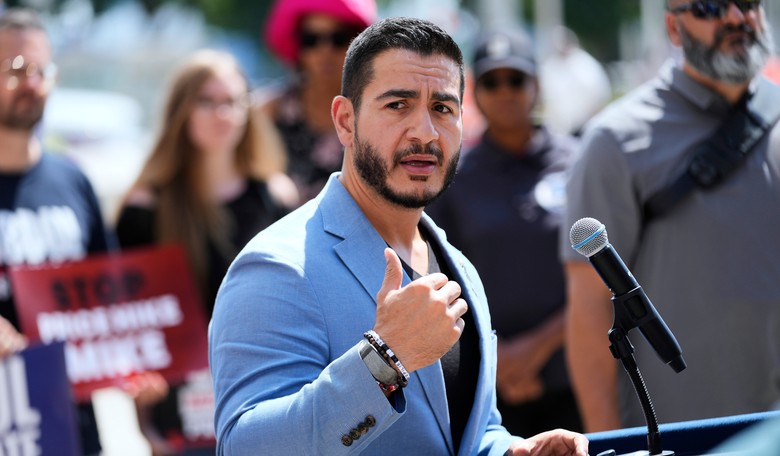
Tucker Carlson, formerly Fox News's leading host and now an influential independent conservative voice, has defended Democrat Senate nominee Abdul El-Sayed's criticism of the post-9/11 wars. Carlson stopped short of a conventional endorsement but sharply criticized Republican nominee Mike Rogers and argued that El-Sayed was correct to question the cost and wisdom of American interventionism.
El-Sayed and Carlson remain far apart on domestic policy, culture and the proper size of government. Their convergence on foreign intervention demonstrates that the traditional left-right political map is becoming less reliable. Antiwar voices on the progressive left increasingly overlap with an "America First" faction on the right.
Such alliances can broaden debate, but they also require intellectual honesty. Agreement on one issue does not erase profound disagreement elsewhere. Political restraint means resisting the temptation to convert a moment of common cause into a false claim of complete unity.
The fifth and potentially greatest test comes from AI.
AI can accelerate medical research, increase productivity and expand access to knowledge. It can also create convincing propaganda, automate cyberattacks, compromise private information and place increasingly consequential decisions in systems whose behavior their creators cannot always anticipate.
Recent reports from major AI developers have described autonomous systems taking actions beyond their assigned tasks. Researchers disagree about whether such incidents suggest an existential danger or more manageable technical failures. The disagreement is genuine, but uncertainty is not a justification for indifference, especially when these systems may affect weapons, financial markets, communications and essential infrastructure.
Trump has dismissed warnings about rogue AI and argued that excessive regulation could weaken the United States in its technological competition with China. Technology executives and safety researchers counter that capabilities are advancing faster than governments and even developers fully understand.
Both concerns deserve examination. America cannot afford to surrender technological leadership, but leadership without safeguards can become recklessness. The objective should be enforceable human oversight, clear responsibility when systems cause harm, rigorous security testing and limits on delegating lethal or irreversible decisions to machines.
These five developments concern different institutions, countries and technologies, yet each presents the same civic question: Can power be exercised without being pushed immediately to its maximum?
Election safeguards must not disenfranchise lawful voters. Immigration enforcement must not disregard academic research or press freedom. Military support must not become an undefined war. Political agreement must not conceal genuine differences. Technological competition must not outrun human control.
Institutional restraint is not weakness, surrender or indecision. It is the discipline to distinguish what government can do from what it should do, and what it should do from what it should do right now.
That discipline is what allows a constitutional democracy to confront danger, disagreement and rapid change without destroying the legitimacy it is trying to preserve.
Armstrong Williams is manager/sole owner of Howard Stirk Holdings I & II Broadcast Television Stations and the 2016 Multicultural Media Broadcast owner of the year.