
There is another reason not to surrender to AI doomerism: most people demanding that we panic cannot clearly explain what the technology can actually do, or what it cannot.
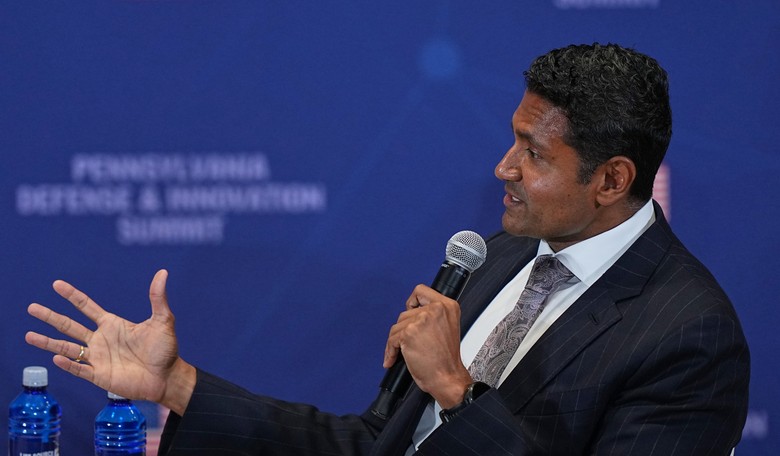
Palantir CTO Shyam Sankar made that point bluntly in an interview this week, describing the emerging anti-AI movement as a “religion,” a “cult-like belief” and, ultimately, a “doomsday cult.” His argument is that Silicon Valley’s conviction that AI will end humanity is not rooted in technical reality so much as a long-running ideological fixation: a dark fantasy that existed in the early 2000s, well before today’s systems were even built.
Sankar’s alternative is simple: do what humanity has done with every consequential technology it has ever built, learn how to harness it, put it to productive use and make it a driver of American prosperity.
"This is really a religion, a cult-like belief, a doomsday cult."
— Fox News (@FoxNews) September 16, 2026
Palantir CTO Shyam Sankar unloads on the ideology he says dominates Silicon Valley's AI labs, saying that predictions of AI destroying humanity have "no rooting in a technical reality."
His point: Americans… pic.twitter.com/pQG4uTkgkK
"We need to understand that we're dealing with these prophecies that have no rooting in a technical reality, that the dominant culture of the AI labs in Silicon Valley is what's called effective altruism. This is really a religion, a cult-like belief, a doomsday cult that has been prophesizing that AI will end humanity since the early 2000s, since before AI was a thing," Sankar said.
"So I think the American people should not take this at face value, that we really have two competing visions of AI. One, which is to create a machine god. That is the obsession of the effective altruists and the dominant kind of strain that we see in Silicon Valley," he said. "And the other, much more practical, is how do we use AI to drive American prosperity, to create more jobs, to make sure the next 250 years are as amazing as the last 250 years? And we need to set this in context, that we are not on a runaway train where brilliant technologists are foreseeing immense risks. We're on a path where specific religious ideology, a secular ideology, has taken over the minds of our researchers."
Put more crudely, AI doomerism is Silicon Valley’s science-fiction fantasy.
The danger is that this imagined apocalypse is quickly becoming the starting point for public policy. Real AI risks must be addressed: fraud, deepfakes, privacy abuses, biased outputs, cybersecurity vulnerabilities and harmful uses by bad actors. But those are concrete problems that can be addressed through targeted enforcement and practical safeguards. In many cases, the law already provides tools to address them: fraud remains fraud, hacking remains illegal, civil-rights protections still apply, and existing consumer-protection, privacy, intellectual-property and criminal laws can punish genuine misconduct regardless of whether AI was involved.
If Washington is going to legislate, or if people succeed in forcing it to “do something,” it needs to keep both feet on the ground. Policymakers must distinguish between what AI can demonstrably do today and what anxious futurists imagine it might do someday. They should not let a handful of Silicon Valley tech bros' turn dramatic voices turn speculative fiction into a permanent regulatory empire.