
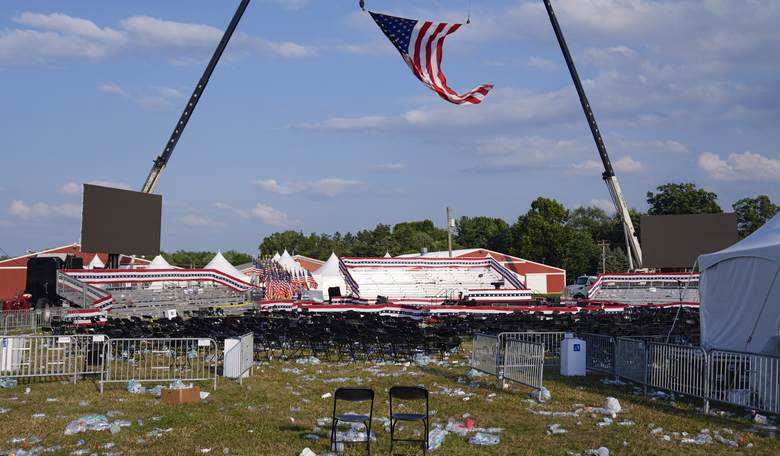
As more information emerges about Thomas Matthew Crooks, the would-be assassin who nearly killed President Trump at a rally in Butler, Pennsylvania, in 2024, one newly disclosed detail from the ongoing investigation is odder than usual.
According to documents provided to Senate Judiciary Committee Chairman Chuck Grassley (R-IA), it was revealed that an anonymous donor paid for Crooks’ cremation shortly after the attack. The note appears at the end of an FBI summary of an interview with Crooks’ father, reportedly based on information from the family’s attorney.
The records do not identify the donor, explain the payment or establish any connection between that person and the assassination attempt.
🔥🚨 JUST IN — An anonymous donor paid to cremate Thomas Crooks ten days after he tried to kill President Trump in Butler, PA, and the paper trail just landed in Chuck Grassley’s committee file.
— The Patriot Oasis™ (@ThePatriotOasis) September 15, 2026
“Anonymous donor paid for cremation.”
Thomas Matthew Crooks grazed Trump’s ear,… pic.twitter.com/nGAGXT1H00
The document also noted that Matthew Crooks, Thomas’ father, was retired and that his wife was on leave from work, suggesting the family may not have been able to cover the cost of his funeral arrangements without outside help.
Other records offer a more troubling portrait of Crooks in the months before he tried to kill Trump. His father said Crooks developed an obsession with firearms during the COVID-19 pandemic and began asking unusual questions, including whether a background check would be required to purchase his father’s Glock pistol. Just days before the assassination attempt, Matthew Crooks said he watched his son pacing around the family garage, flailing his arms while cleaning a gun and seemingly carrying on a conversation with himself that “didn’t make any sense.”
New FBI documents are revealing what Thomas Crooks' own father told investigators about the son he struggled to read long before the Butler assassination attempt.
— Fox News (@FoxNews) September 15, 2026
Crooks' father described him as quiet, emotionally difficult to read and sometimes destructive when he got bored. As… pic.twitter.com/iFuVTJhLfW
The documents also reveal that Crooks made numerous online purchases of “parts, tools and items to increase the capacity of his rifle,” using the false name “Bob Dole” to have packages delivered to his parents’ home.
🚨 BREAKING: Attempted Trump assassin Thomas Crooks had packages of gun parts delivered to him under the pseudonym 'Bob Dole,' and an anonymous donor paid for his body to be cremated, according to federal records obtained by Fox News Digital pic.twitter.com/v1moKrwstG
— Fox News (@FoxNews) September 15, 2026
This comes as investigators and lawmakers continue trying to piece together every possible detail about Crooks and his assassination attempt. Rep. Clay Higgins (R-LA), who served on the House task force investigating the Butler shooting, was among the first to publicly reveal that Crooks’ body had been released to his family for cremation just 10 days after the attack. The decision to release it eliminated any possibility of further independent examination or testing, which Higgins argued could have helped confirm the autopsy findings and preserve evidence for Congress’ investigation.
The anonymous payment for Crooks' cremation does not, by itself, prove anything sinister. Crooks’ family may simply have received help at a time when it could not afford the cost of cremation. But in an investigation already marked by security failures, missing answers and the rapid destruction of evidence, it is another detail that should not be brushed aside.