
This week, America marks two solemn anniversaries on consecutive days.
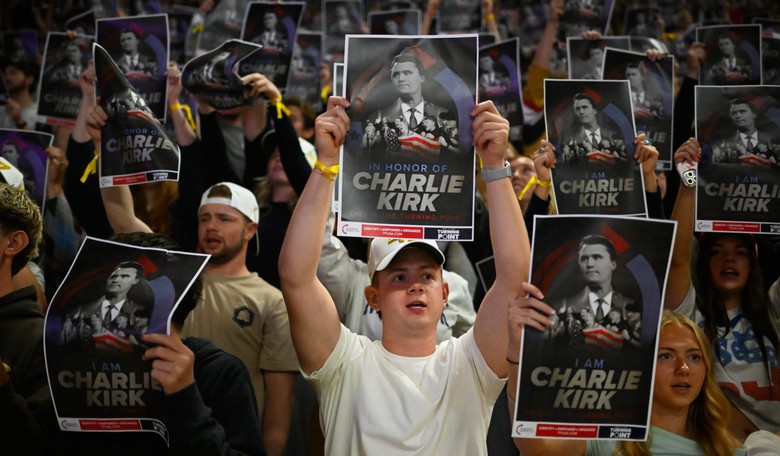
September 10 marks one year since Charlie Kirk was assassinated while engaging students in public debate at Utah Valley University. September 11 marks 25 years since terrorists murdered nearly 3,000 people on American soil.
Both tragedies confront us with the same fundamental truth: Evil seeks to silence, terrorize and destroy. The Bible puts it even more personally, identifying evil with a name: “The thief comes only to steal and kill and destroy.” And a free society cannot survive if we lose the moral clarity to recognize that thief and the courage to resist him.
Those of us old enough to remember September 11, 2001, remember more than where we were when the planes struck. We remember the moral clarity that followed.
We knew innocent people had been murdered. We knew firefighters running into the towers were heroes. We knew passengers aboard Flight 93 sacrificed themselves to save strangers. We knew the terrorists who deliberately targeted civilians were evil.
Americans argued later—and rightly so—about wars, intelligence failures, foreign policy and the proper limits of government power. But on that morning, no serious person suggested that the victims somehow deserved what happened because of their politics, careers, religion or perceived privilege. We did not comb through their histories looking for reasons to withhold sympathy. We did not demand ideological agreement before mourning the dead.
They were Americans. They were human beings made in the image of God. They were innocent. That was enough.
Twenty-four years later, Charlie Kirk was murdered while doing something distinctly American and profoundly Christian: standing in a public forum, inviting questions and debating people who disagreed with him.
Charlie did not carry a weapon onto that campus. He carried arguments. He did not demand that his opponents be silenced. He handed them a microphone.
Yet after his assassination, many people did what they largely refused to do after 9/11: They searched for reasons the victim was unworthy of grief. They recycled controversial quotations, relitigated political disagreements and treated his murder as an occasion to explain why he had invited hatred.
The implication is unmistakable and often posted on social media in blunt terms not even trying to hide the implication: Yes, murder is wrong—but Charlie said things we found offensive.
There can be no “but” after condemning an assassination or an act of terrorism.
Political disagreement does not diminish the sanctity of human life. Offensive speech does not constitute a death sentence. A person does not forfeit his humanity or right to life because strangers dislike his political opinions.
If our condemnation of murder depends upon whether we approve of the victim, we do not possess a moral principle. We possess a partisan preference. If our condemnation of the murderer depends on whether we feel sympathy for their backstory, we do not possess a moral principle. We possess toxic empathy.
That is the warning contained in these two anniversaries.
After 9/11, America could identify evil. Today, we are increasingly tempted to empathize with villains who are “misunderstood” and excuse their evil while carelessly and callously blaming the victims or not thinking of them at all.
We have replaced political opposition with moral dehumanization. People are no longer merely wrong; they are dangerous. They are not neighbors to be persuaded but threats to be eliminated. Once that premise is accepted, violence becomes easier to excuse. If someone’s speech is itself characterized as violence, then actual violence against him can be repackaged as self-defense.
That is how a culture prepares itself to tolerate political bloodshed.
Charlie understood that the answer to bad ideas was not censorship or coercion, but better ideas. He went onto college campuses because he believed disagreement could be confronted through speech. He was willing to stand before hostile audiences and answer questions in real time. He trusted young Americans enough to debate them.
The assassin’s bullet was an attack not only on one man, a husband and father, but upon the proposition that our differences can be resolved without violence.
Charlie’s answer to disagreement was dialogue. His murderer’s answer was death.
America’s answer to disagreement is freedom. Western Civilization’s would-be assassins’ answer is death.
“For we do not wrestle against flesh and blood,” Paul writes in Ephesians 6, “but against the rulers, against the authorities, against the cosmic powers over this present darkness.”
That truth should restrain us from answering hatred with hatred, even as it compels us to confront evil honestly.
The unity Americans experienced after 9/11 was never perfect, and it did not last. Some of the decisions made in the fear and anger of that moment deserve continued scrutiny. But beneath that unity was a moral conviction we desperately need to recover: Innocent life is sacred. Courage is honorable. Deliberately murdering people to advance an ideology is evil. And freedom is worth defending.
“Never forget” cannot mean merely remembering where we were on one terrible morning. It must mean remembering who we are—and what kind of people we refuse to become.
We must never forget the firefighters who climbed while others fled.
We must never forget the passengers who fought back over Pennsylvania.
We must never forget the husbands, wives, parents and children who never came home.
And we must never forget the husband and father who walked onto a college campus with a microphone because he believed Americans could still speak to one another.
What we believe as a society matters.
We can teach that speech is answered with speech, that freedom begets liberty, that political opponents retain their God-given dignity and that courage means standing for truth without surrendering to hatred.
Or we can teach that empathy is tribal, violence is negotiable, and murder becomes understandable when the victim holds the wrong opinions or the murderer is sympathetic and we cannot judge.
Only one of those paths remains compatible with a free civilization.
September 10 and September 11 now stand beside one another on the calendar: both marking attacks intended to terrorize an entire nation.
Both call us to mourn. Both call us to remember. And both call us to reject the poisonous lie that violence can defeat truth.
It cannot.
The proper answer to terror is courage. The proper answer to hatred is truth. And the distinctly Christian answer to evil is justice without vengeance, conviction without dehumanization, and courage without surrender.
One year later and 25 years later, America must remember again.