
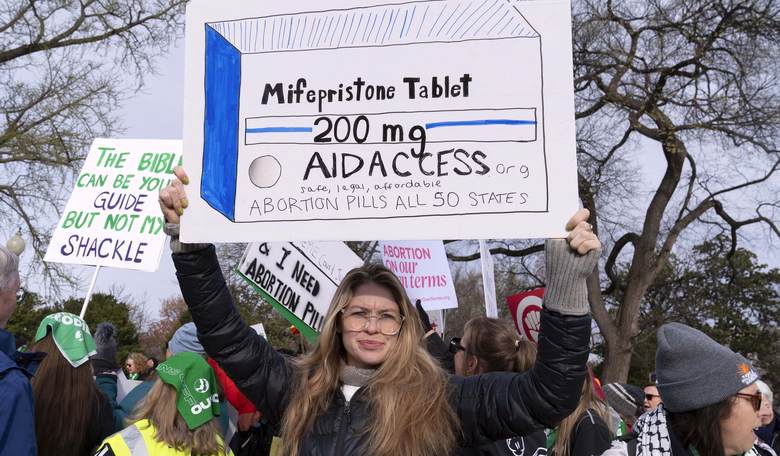
By removing the guardrails surrounding the abortion pill, former Presidents Barack Obama and Joe Biden unleashed a dangerous abortion drug that has been a disaster for women. Republicans have sought to restore safety measures and protect women from these pills. On May 1, the 5th Circuit Court of Appeals issued a stay that temporarily blocked the mailing of the abortion drug while litigation worked its way through the courts. Two weeks later, the U.S. Supreme Court temporarily reversed that ruling.
Now, a new report from the Senate Health, Education, Labor, and Pensions (HELP) Committee reveals a startling lack of action on the part of companies that manufacture those chemical abortion drugs, and just how that inaction is putting women's lives at risk.
This report is the product of a months-long investigation into companies like Danco Laboratories, GenBioPro, and Evita Solutions and cites the reckless removal of the Food and Drug Administration's (FDA) Mifepristone Risk Evaluation and Mitigation Strategy (REMS) Program as the reason women's lives have been endangered. That REMS program required the reporting of non-fatal adverse events, the in-person dispensing of chemical abortion drugs, and in-person follow-ups. Ending those requirements has led to coerced abortions and the proliferation of chemical abortion drugs outside of approved channels.
One victim of this policy was Catherine Herring. In 2022, she was separated from her husband when she found out she was pregnant with their third child. Without Herring's knowledge or consent, he ordered the abortion pill online and spiked her beverage with it. It made Herring very ill, and she ended up in the ER. Thankfully, she was able to start a regimen to reverse the abortion pill, and her daughter was born healthy. Her estranged husband was arrested in May 2022.
Despite these dangers, the aforementioned companies have failed to ensure that their drugs are available only through REMS-compliant channels or that certified prescribers and pharmacies comply with the scant remaining FDA requirements. One example is Aid Access, a website that allows anyone to order Mifepristone without medical oversight or a direct patient-prescriber relationship.
According to the HELP Committee report, when Mifepristone (also sold as Mifeprex) was approved in 2000, the approval included numerous restrictions to reduce safety risks. Those restrictions involved limiting use to the first seven weeks of pregnancy, in-person administration at an approved healthcare facility (clinic, hospital, medical office) by a certified prescriber, a mandatory in-person follow-up visit 14 days after taking the drug to verify abortion status, reporting all adverse events to the FDA, and a signed FDA-approved patient agreement form. All of that was wiped out. In 2021, under the guise of COVID, the Biden administration halted enforcement of the in-person dispensing requirement and the 14-day follow-up appointment.
In addition, the Obama administration's 2016 removal of the requirement to report non-fatal adverse events related to Mifepristone led to a sharp drop in the number of adverse events reported to the FDA. This raises serious questions about whether or not adverse events are being underreported. As Townhall noted in previous reporting, the FDA said the risk of sepsis, infection, hemorrhaging, or other serious side effects of the abortion drug Mifepristone was 0.5 percent. In reality, the risk is 10.93 percent — 11 times higher.
During the investigation, Danco and GenBioPro told the Committee they have no role in ensuring that doctors and others who prescribe these dangerous drugs comply with FDA requirements. They're also limiting what information about the drug is publicly available. Per the Committee's report, "All three mifepristone sponsors have little information publicly available about their operations, and the FDA has gone to unprecedented lengths to shield information about not only these manufacturers but also details of the regulatory review of mifepristone itself." It notes that during the initial approval process, the Clinton administration FDA Commissioner, Jane E. Henney, said that "the agency broke with precedent by not publishing the name of the experts who reviewed the new drug application ... for mifepristone." The FDA continues to redact Mifepristone-related records "in an unprecedented manner" the report says.
The Committee's report concludes that the lack of transparency raises "critical questions about the effectiveness of their oversight of the supply chain for their drugs and prescribers to ensure compliance with REMS requirements."
In June, multiple Republicans filed amicus briefs calling for a restoration of Mifepristone's in-person dispensing requirement, and called on Sec. Robert F. Kennedy Jr. and the FDA to complete a safety review of abortion drugs.
The HELP Committee report demonstrates one undeniable truth: years of Democratic rollbacks of abortion drug safeguards have put women's safety and lives at risk, and the FDA must act to not only restore those guardrails but to hold the abortion drug manufacturers accountable.
"Chemical abortion drug makers profit off killing innocent children while putting mothers’ lives at risk," said a HELP Committee spokesperson. "These companies and third-party sellers have fueled the explosion in online sales of these harmful drugs, opening the door to coercion and abuse of women. The HELP Committee will hold these companies accountable and protect mothers and babies."