
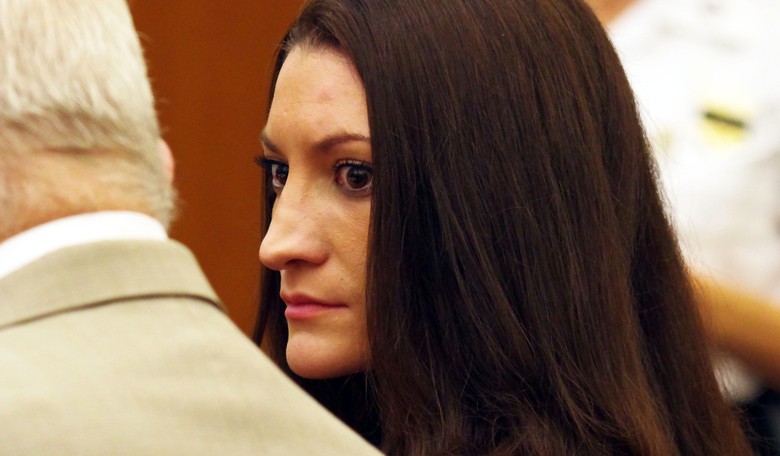
This morning, women in pink gathered in silent solidarity for Lindsay Clancy. Outside the Plymouth courthouse and in cities across the country, supporters stood hand in hand under the banner “Stand in Peace for Lindsay.”
Social media campaigns across the internet are working hard to humanize the woman who, on January 24, 2023, strangled her three children — Cora, 5; Dawson, 3; and Callan, then 8 months — with exercise bands in the basement of their Duxbury, Massachusetts, home after sending her husband out on an errand. She then cut herself and jumped from a second-story window in a suicide attempt that left her paralyzed from the waist down.
Her defense does not deny the killings but rather says that she should not be held criminally responsible because of postpartum psychosis, exacerbated by a cascade of psychiatric medications. But prosecutors say Clancy was fully aware of the evil she was committing. The three children are still dead. Lindsay Clancy never claimed she did not kill those babies.
I am a mom of five. I have suffered miscarriages. After one of those losses, I was prescribed multiple medications for anxiety and depression. I felt like a shell of a person. I lost myself and stopped after just one month. I thought to myself, “I can do better. We can do better.” That personal experience left me wary of how quickly we reach for pills to treat ordinary human suffering, and how rarely we question the system that encourages it.
The irony is difficult to ignore. Many of the same voices now gathered in pink and condemning a broken healthcare system have long been sold on the idea that socialized medicine or ever-expanding government control will fix it.
They have not taken the time or done the research to truly fathom how large of a chokehold the pharmaceutical industry has on American medicine.
But President Trump’s Make America Healthy Again movement has taken on this issue: the over-medicalization of ordinary human experiences, especially among children, adolescents, and young women, and the epidemic of prescribing pills before relationships, therapy, nutrition, sleep, or real agency.
One analysis of post-pandemic trends found antidepressant prescriptions rose 137 percent among girls ages 6–12 and 65 percent among girls 13–18. The young women of America are being pumped full of anti-anxiety and depression medications at the most vulnerable times in their lives, before they even have a chance to understand how underlying factors like social media, sleep disruption, family stress, or lack of purpose might be causing their mental health to decline.
Foster care youth encounter even greater rates. National data and state reports consistently show children in the child welfare system are prescribed psychotropic medications at two to several times the rate of other Medicaid-enrolled children. Some reports show that as many as one in three children in foster care are prescribed psychiatric drugs, often antidepressants or multiple medications at once. These are children already dealing with trauma, instability, and loss. Medicating them at scale without rigorous, ongoing scrutiny is a symptom of a system that prioritizes quick fixes over health.
Pharmaceutical influence did not create every prescription, but it helped build the culture in which medication became the path of least resistance. For years, industry marketing, payments to physicians, and financial ties among guideline authors shaped how psychiatric conditions were defined and treated. Studies have documented conflicts of interest in DSM panels and clinical guidelines.
Marketing dollars once flowed heavily toward clinicians; disease-awareness campaigns expanded diagnostic boundaries. Negative trial results for certain antidepressants in youth were covered up. The result is an environment in which doctors, under time pressure and with limited alternatives, reach for SSRIs for adolescents and young mothers before looking at root causes.
This is precisely the territory the MAHA agenda has entered. In May 2026, HHS Secretary Robert F. Kennedy Jr. announced a federal action plan spotlighting informed consent and shared decision-making, regular review of risks and benefits, and non-medication approaches — psychotherapy, family support, nutrition, physical activity — when clinically appropriate.
SAMHSA was tasked with examining prescribing trends, hosting clinician education on adverse effects and tapering, and elevating holistic options. The message is straightforward: psychiatric medicines have a role, but they should not be the default, especially for children.
One concrete win under this agenda has been the restoration of hormone therapies for women. Secretary Kennedy and the FDA removed outdated black-box warnings that for two decades had driven women away from hormone replacement therapy, and they have opened the door to more individualized hormone optimization, including clinically appropriate testosterone for women experiencing low energy, diminished libido, or mood changes tied to hormonal imbalance. For some women, these approaches can restore resilience and clarity without defaulting to an SSRI. That is the opposite of over-medicalization: it treats the body as an integrated system rather than a collection of symptoms to be chemically suppressed.
Putting the patient back at the center means restoring the relationship between doctor and patient. It means demanding that clinicians weigh risks and benefits transparently, offer alternatives first when appropriate, and refuse to treat every episode of grief, anxiety, or postpartum struggle as a lifelong chemical deficiency. It means ending the capture of guidelines and treatment algorithms by industry incentives. That work cannot be done by a big government socialist medicine approach or by layering more central planning onto a system already distorted by concentrated power. Socialism expands the same bureaucracies and formulary controls that already distance patients from individual judgment. It cannot create more agency; it only relocates the decision-makers farther from the exam room and the family.
Freedom, not socialism, brings personal sovereignty through patient empowerment and individualization. Transparency, informed-consent guardrails, liability that tracks harm, competition in care models, and a cultural expectation that doctors treat people rather than protocols expand the space in which mothers, fathers, and patients can refuse what does not serve them. That is the real fight. Notice how little you have heard from the Left about the pharmaceutical grip on pediatric and perinatal mental health, or about the specific patterns of overmedication in foster care and among teenage girls. Thankfully, as a grown woman and mother, I was able to quit the medications prescribed to me, but what about the young girls being spoon-fed psychiatric medicines? Will they turn to pill bottles when they become mothers and times are tough?
The three Clancy children are gone. No pink gathering changes that fact. A serious country would honor their memory by refusing to look away from the systems that failed them and so many others and by choosing freedom, accountability, and patient-centered care over the next ideological shortcut. We can, and must, do better.
Ashley Hayek is the mother of five children, President of America First Works, and former Coalitions Director for the Trump 2020 campaign.