
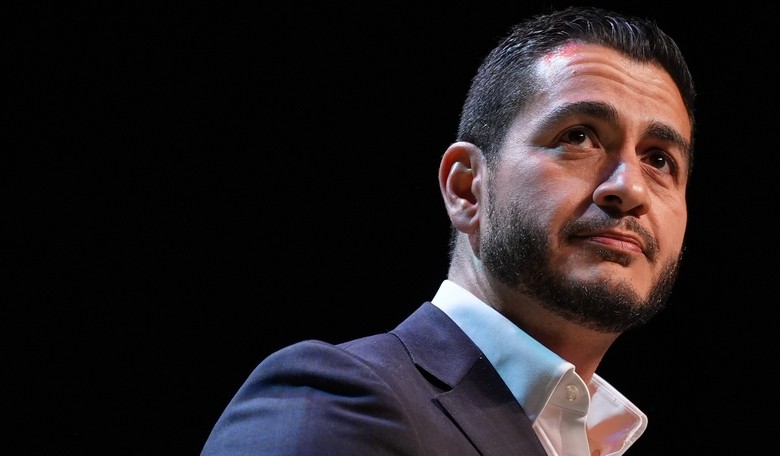
CNN analyst Harry Enten has some horrible news for Democrats after Michigan Senate nominee Abdul El-Sayed won his primary race on Tuesday.
During a Wednesday broadcast, he indicated that Democrats’ chances of winning the Senate seat have dropped since they nominated a socialist candidate.
“You know, once El-Sayed became the favorite for that nomination and now that he's actually become the nominee, Democratic chances have fallen dramatically,” Enten said.
He explained that back in April, the Democrats “had a 79 percent chance” of winning the seat. But now, that number “has fallen dramatically” to 59 percent. He further noted that the Republican nominee, Mike Rogers, had a 21 percent chance of winning in April. Now, that number has almost doubled, with Rogers having a 41 percent chance.
So the people are putting their money where their mouths are, quite skeptical at this point, or at least significantly more skeptical that Democrats will be able to hold on to the Michigan Senate seat with El-Sayed as the nominee, though I still should note he is the slight favorite here. But given Michigan being a purple state and given where Trump's approval rating is, I think it's quite surprising that his numbers are not significantly higher.
Enten further noted that “Democrats have been hemorrhaging working-class voters, voters without a college education.”
The analyst continued, saying El-Sayed's support came from affluent areas and not working class communities. “And I think there's real worries among Democrats, well, will that transfer over to the general election and El-Sayed continue to have the problems that prior Democrats have had with the working class? He asked.
🚨 NEW: CNN’s data guru Harry Enten STUNNED as Dem odds of winning Michigan seat have “fallen dramatically” after El-Sayed victory
— TV News Now (@TVNewsNow) August 6, 2026
“Mike Rogers, the Republican nominee — look at this: His chance basically doubling, now up to a 41% chance.” pic.twitter.com/fAzhdodObA
This is horrible news for Democrats, but they can’t be surprised. With El-Sayed as the nominee, Democrats have someone who won’t appeal to regular, working class Americans like his primary opponent, Rep. Haley Stevens. With a platform including Medicare for All, abolishing ICE, and sharp criticism of Israel, El-Sayed appeals strongly to the party’s left wing and college-town voters but underperforms with the broader coalition needed to win a purple, Trump-won state.
El-Sayed has had problems winning over black voters, working-class communities, suburban moderates, and independents. Primary results already showed him lagging in metro Detroit and traditional Democratic strongholds where Stevens was stronger, raising doubts about his ability to generate the high turnout and crossover support required in November.
Of course, this doesn’t necessarily mean he can’t win. But it won’t be nearly as easy for Democrats as it would have been if they nominated a more moderate candidate.