
Last November, I wrote that with Zohran Mamdani’s mayoral win, New York City would become the place where the Make America Healthy Again movement goes to die. Looking back, I underestimated just how quickly his version of “government” would begin to materialize.
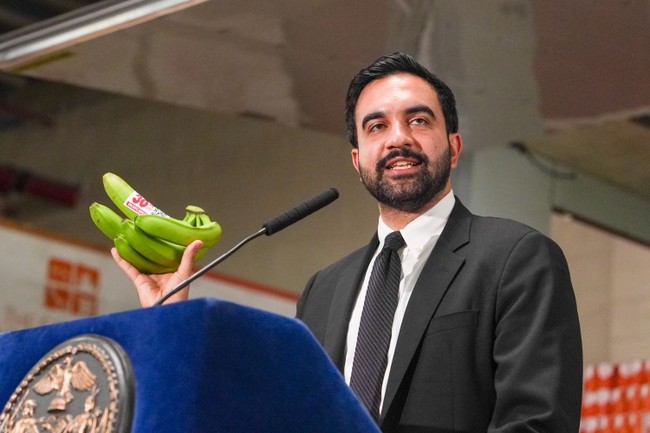
Because this week, Mamdani announced the first location of his taxpayer-funded grocery store initiative — a plan to create government-backed grocery stores across New York City with prices set below the private market.
This is something we’ve seen fail time and time again in real life, yet Mamdani says it’s something he “believe[s] will work.” Well, folks, I also believe I’m going to win the lottery every time I buy a ticket, but alas, my belief has yet to turn into reality. Funny how that works, right? And while the headlines are about groceries… groceries aren't actually the story here; government is.
On the surface, the proposal sounds compassionate. Lower prices, cheaper groceries, and help for struggling families. Who could possibly oppose that? But beneath the marketing is a much bigger question:
When did government stop being the safety net and decide it should become the business?
America already has an extensive network of food assistance programs: SNAP, WIC, school breakfast and lunch programs, food banks, churches, private charities and community organizations. If someone genuinely cannot afford food, there are already numerous public and private programs designed to help.
And since those programs already exist, why are taxpayers now being asked to spend $70 million to open government-backed grocery stores? That's the question some people don’t seem interested in or even comfortable asking. Because this isn't about filling a gap, it's about replacing something that already exists and creating more dependency.
We don’t need more grocery stores. We literally have thousands! With around 33 percent being categorized as "independent grocers." Those are your entrepreneurs who mortgaged their homes, worked impossible hours, hired local families, paid taxes, sponsored Little League teams, and took on enormous financial risk.
Government didn't build those stores, Americans did.
Now imagine spending 20 years building a neighborhood grocery store only to have the government open a competing store down the street. Only this competitor doesn't play by the same rules. This competitor has taxpayer funding, can absorb losses, doesn't pay rent on city-owned property, and when their model doesn't work, the taxpayers cover the difference. That's NOT competition! That's the government sandbagging the very people who fund it.
Recently, New York Democratic Socialist Party co-chair Gustavo Gordillo dismissed concerns about neighborhood businesses by suggesting that if a single government grocery store could put a business under, perhaps it "shouldn't have been in that business in the first place."
That statement should alarm every small business owner in America. Because it reveals something much larger than a grocery store proposal; it reveals a philosophy. One that increasingly views private enterprise not as something to encourage, but as something government can replace.
Supporters insist this is simply about affordability, but affordability has never been the only question. The real question is whether government should become a direct “competitor” in the marketplace. Because if government can own grocery stores, why stop there?
Government pharmacies? Government gas stations? Government clothing stores? Government restaurants? Where does it end?
Government works best when it establishes the rules of the game, not when it decides it should become one of the players. History has shown us that government rarely shrinks once it enters a new space. It expands. One program becomes two. Two become 10. Temporary becomes permanent.
The grocery store is just the latest example, and that's why this debate matters far beyond New York City. It's about the kind of country we're becoming.
One where citizens build businesses or one where government increasingly believes it should become the business itself. Slowly consolidating more control over the people that said government is here to serve. Not control, serve.
This is not just a debate about groceries. This is a debate about America.