
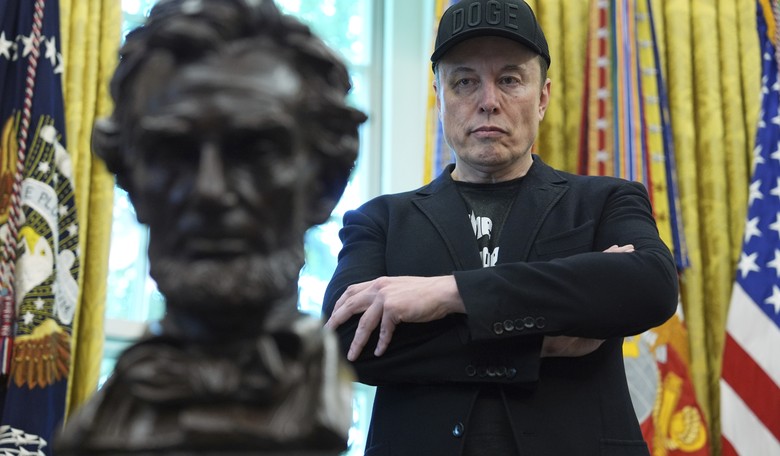
Elon Musk suggested that the reason he left the Department of Government Efficiency (DOGE) initiative was that nobody wanted to slash government spending except for people like Sen. Rand Paul (R-KY).
During an appearance on Walter Isaacson’s “The Builders” podcast, Musk said the only real way to fix the deficits is through “AI and robots” and that almost nobody in power wishes to reduce spending or the size of government.
“We’re not gonna solve it by trying to save our way there,” Musk said.
Musk also admitted he got “carried away” with DOGE and that the program should have only lasted “a month or two.”
"The appetite is not there at the presidency, the House, the Senate, or the judiciary," Musk said. "Basically, no one in authority in the government whatsoever, really, with maybe a few rare exceptions of like the Rand Pauls of the world type of thing, actually wants to reduce spending."
Musk further added that “Maybe if the president made that his primary goal, we could do that,” but also acknowledged that “If you try to solve the deficit and stop wasteful spending, you make a lot of enemies. President Trump likes to be liked. He doesn’t like people calling him, being upset about … some funding being stopped.”
President Donald Trump established DOGE as a temporary initiative by executive order on his first day back in office. It's stated objectives included modernizing federal technology and software, maximizing productivity, and eliminating waste, fraud, and abuse in government
The administration says DOGE terminated 13,440 contracts, 15,887 grants, and 264 leases, drove large workforce reductions through buyouts and deferred-resignation programs, and sharply scaled back agencies such as USAID while claiming $215 billion in savings. The program was scheduled to end on July 4, 2026
Several controversies surrounded the initiative. The moment the program was announced, a fierce backlash ensued from Democrats who simply needed to oppose something President Trump did.
However, some claimed DOGE’s claims about the savings it generated were inaccurate or exaggerated. They also noted that overall federal spending did not decline while DOGE was active.
Folks on the left filed numerous lawsuits challenging the mass layoffs, DOGE’s access to sensitive data systems at agencies including the Social Security Administration and privacy issues.
Others criticized Musk for holding billions in government contracts in his businesses while he led the effort.
HERE WE GO 🚨 16 Congress Democrats call on launching investigations into Elon Musk for more than 8 “crimes” If Democrats win Midterms it’ll be back to endless Investigations, Committees and Hearings against their political opponents The Democrats who want to investigate Elon Musk include: Rep Elizabeth Warren Rep Robert Garcia Rep Zoe Lofgren Rep Greg Meeks Rep Pramila Jayapal Rep Sydney Kamlager-Dove Rep Greg Casar Rep Maxine Dexter Rep Gerald Connolly Rep Jamie Raskin Rep Stephen Lynch Rep Jasmine Crockett Rep Kweisi Mfume Rep Richard Blumenthal Rep Chris Van Hollen Rep Ron Wyden The crimes Democrats believe Elon Musk is guilty for are - His role leading DOGE and the resulting federal job cuts, data access and alleged illegal spending freezes (like USAID) - Conflicts of interest from his companies holding billions in federal contracts and subsidies while he held a government role - Influence over Starlink, Starshield access for Ukraine - Alleged overstatement of DOGE savings and related GAO findings - Claims of data theft or improper access to sensitive systems from Treasury, Social Security and more - Dismantling of USAID and impacts on foreign aid and science agencies - Corruption, lawlessness and an unelected billionaire wielding executive power - His large political donations to Republicans and perceived efforts to shape government for personal or corporate gain, they say this is a crime
— Wall Street Apes (@WallStreetApes) October 21, 2026
Musk’s comments aren’t surprising. Even when the DOGE initiative was announced, I knew there was no chance it would significantly reduce government spending. This isn’t because those involved did not want to shrink the size and scope of government, along with federal spending. It was because I knew Congress would reject the majority of the initiative’s recommendations.
Musk highlighted a harsh truth that those who value limited government should hear: Almost nobody in any sector of government wants to reduce the size of the state. As Musk said, Trump would face an avalanche of opposition if he even made steps in that direction.
If the government loses power, so do those who run it. It means fewer ways to leverage the state for their own ideological or personal agendas. They can’t funnel taxpayer funds to their cronies and friends. The nature of a corrupt government is to protect its corruption, not root it out. Because of this, DOGE was destined to fail.
But there is a silver lining.
DOGE’s fate is yet another data point showing the nation that their leaders are working harder to keep higher government spending and an ever-growing state than they are to counteract it.