
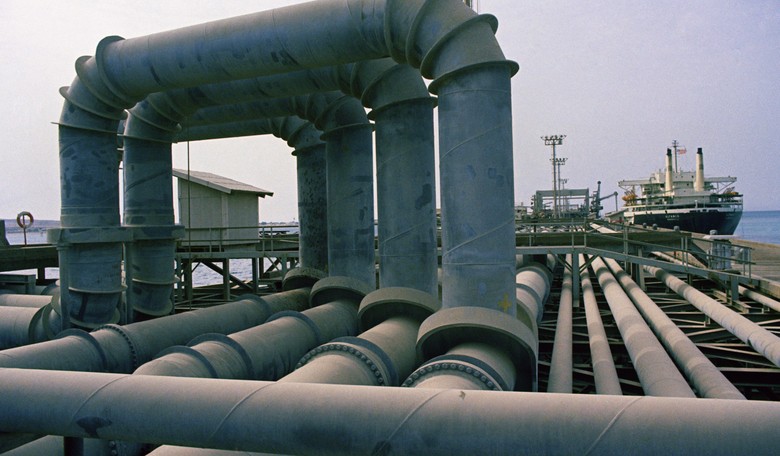
Iran’s seemingly unlimited offshore oil stockpile is officially depleted.
For months, Iran has kept its economy afloat and maintained its grip on power by drawing on a fleet of “shadow tankers” off the coast of Asia. Those vessels collectively held about 135 million barrels of oil, which Iran has steadily sold to China throughout the war that began in February. That revenue allowed the regime to withstand the U.S. Treasury’s Operation Economic Fury alongside the American military's blockade of its imports and exports.
But according to The Wall Street Journal and Treasury Secretary Scott Bessent, that financial lifeline has now run dry.
🚨 BREAKING OVERNIGHT: IRAN'S major shadow fleet of tankers is officially *OUT OF OIL*, predicted by Treasury Sec. Scott Bessent and caused by Trump and Hegseth's blockade — WSJ THERE IT IS 🔥🔥 When the war started, Iran had about 135 million barrels parked on tankers off Malaysia and Singapore, sold quietly to China for billions, WSJ reports The reserves were under 1 million barrels by Oct 5 and are now completely exhausted. ZERO!!! CENTCOM says the blockade has denied Iran at least $25 billion in oil revenue Oil makes up 30-40% of the regime's government revenue, and its currency has lost a third of its value since July Maximum pressure is WORKING. Bessent called it and this was part of their plan! 🇺🇸
— Eric Daugherty (@EricLDaugh) October 22, 2026
The Iranian regime will now feel the full effect of Operation Economic Outcast working in tandem with the American military’s blockade. The country has already taken a severe economic beating over the last several months, and with its offshore oil lifeline gone, the pressure is only expected to intensify.
What that means for bringing a swift end to the war is unclear, but promising.
"Before: tankers filled Iran’s main oil-loading terminal. After: no crude tankers in sight. Kharg Island is now nothing more than a monument to the one thing the Iranian regime can still produce: failure," Treasury Secretary Scott Bessent wrote in a statement on X Thursday. "The regime’s arrogance and belligerence continue to punish ordinary Iranians. Operation Economic Outcast is cutting off the regime’s oil lifeline, denying it resources to fund terrorism, nuclear procurement, and the lavish lifestyles of the IRGC elite."
Before: tankers filled Iran’s main oil-loading terminal. After: no crude tankers in sight. Kharg Island is now nothing more than a monument to the one thing the Iranian regime can still produce: failure. The regime’s arrogance and belligerence continue to punish ordinary Iranians. Operation Economic Outcast is cutting off the regime’s oil lifeline, denying it resources to fund terrorism, nuclear procurement, and the lavish lifestyles of the IRGC elite.
— Treasury Secretary Scott Bessent (@SecScottBessent) October 22, 2026
Three and a half weeks ago, Treasury Secretary Bessent gave the Iranian regime just two weeks “to make their final deliveries of oil to China,” warning that afterward, “they will have nothing.” His timeline was off by just a week and a half. His warning, it appears, was not.