
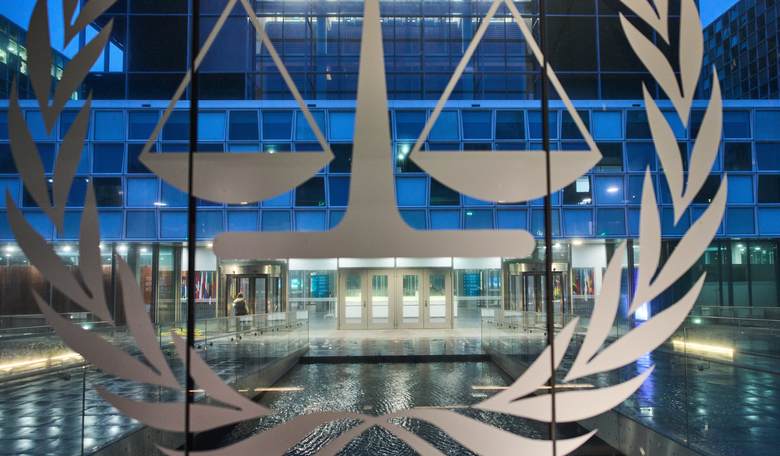
The International Criminal Court (ICC) has become a priority target of the Trump administration, which argues that the Court threatens American sovereignty. The U.S. never joined the treaty that established the Court and does not recognize its authority over Americans. But the Court claims the right to investigate and prosecute citizens of non-member countries if they are accused of committing crimes on the territory of member countries. This means that American military personnel and other U.S. citizens serving abroad could potentially face prosecution by a court whose authority their own government never accepted.
On November 9, just days after disastrous midterm results for Republicans, Rubio brought the issue directly to the G7 foreign ministers' meeting in Paris, warning that Washington could inflict “tremendous damage” on the ICC unless it recognized the limits of its jurisdiction.
Even after an electoral setback at the midterms, Washington’s continuing criticism of the ICC shows that the administration, whatever happens, takes American sovereignty and the operational autonomy and security of the American armed forces seriously.
But why has the ICC become such an obstacle?
The overall quality of international institutions has declined over time. Some, like the International Atomic Energy Agency, endure because of a technical mandate. Others, like the UN and ICC, are politically exposed. They require competent leadership and international buy-in. The ICC increasingly has neither. Its difficulties are not simply the product of American hostility. They reflect a long history of internal failures.
The tenure of the ICC's founding chief prosecutor, Luis Moreno Ocampo, offers perhaps the most consequential example. The court's review of its failed prosecution of the so-called “Ocampo Six” in the wake of post-election violence that shook Kenya in 2007 was particularly damaging. Ocampo flamboyantly named the key suspects early in the proceedings, without establishing solid evidence or securing key witnesses. In time, the effort unraveled, with witnesses recanting or disappearing. The Court’s investigation described Ocampo's approach as autocratic and resistant to contrary assessments. Ultimately, the cases against the Ocampo Six, including later Kenyan presidents Uhuru Kenyatta and William Ruto, collapsed completely.
Controversy followed Ocampo after his departure in 2012. In 2017, leaked correspondence raised questions about his post-tenure financial arrangements, alleged conflicts of interest, and continued contacts with individuals inside the prosecutor's office. The allegations included a proposed multimillion-dollar consulting arrangement involving a Libyan businessman. However, the ICC acknowledged that it had not maintained the financial disclosure system subsequently introduced in 2015 during Ocampo’s tenure—a failure of self-governance that further discredited the Court.
More recently, leaked recordings purportedly involving Ocampo and his son raised allegations of efforts to influence Armenian politics, including opposition to Prime Minister Nikol Pashinyan. The recordings and the broader allegations have not been independently verified.
Ocampo is not a singular problem. Former prosecutor Karim Khan's recent ejection after allegations of sexual misconduct has done little to reassure skeptics. In July 2026, the Assembly of States Parties, the ICC governing body, voted to remove him following disciplinary proceedings.
This credibility problem is no longer confined to Washington. It’s spreading to Europe, where even governments that support the ICC have challenged its authority. France and Italy, for example, have asserted that Israeli Prime Minister Benjamin Netanyahu enjoys immunity from the Court’s arrest warrant. In November 2024, shortly after the Israeli cabinet agreed to a French-backed ceasefire in Lebanon, Paris claimed that Netanyahu had immunity from ICC warrants because Israel is not an ICC member. In January 2025, Rome announced that it would not enforce the warrant after legal advice from Italy’s foreign and justice ministries confirmed that immunity for visiting leaders is permissible under the Vienna Convention.
Some members of European opposition parties are also beginning to rebel against the ICC. In October, the lower house of the Dutch parliament defeated a proposal introduced by the Party for Freedom (PVV), headed by Geert Wilders, to expel the ICC, with Wilders posting on X “Netherlands out of the ICC. And the ICC out of the Netherlands!” Though the measure was defeated, one of the larger parties in the Dutch parliament introduced it. Harald Vilimsky, head of the European Parliament delegation of the Austrian Freedom Party and a friend of Israel, has slammed the EU’s embrace of the Court, saying it “proves the EU’s diplomatic incompetence,” and characterizing the Court as “An institution that increasingly disregards the sovereignty of states and sets itself up as the supreme moral authority.”
These objections are not uniform and follow different logic, but they show a growing appetite across Europe for American-style pushback on sovereignty.
The ICC retains a worthy mandate and lofty principles but has shown little willingness to undertake the reforms needed to restore trust. The Court has faced existential problems and fateful questions about the conduct and management of its prosecutorial leadership, then failed to rise to the challenge with reflection, reform, and a renewed understanding of the limits of its power. If the Court doesn’t change, some of the countries Washington is urging to abandon membership may begin to consider Rubio’s call.