










Everyone seems pretty cross at this juncture in the fight over raising the debt limit. As this is written, the House has just passed the bill that Speaker John Boehner yanked from the floor Thursday night and then revised with a balanced-budget amendment on Friday. The Senate has yet to pass Majority Leader Harry Reid's measure that in many but not all respects is not that much different.
It looks like the Senate will approve Reid's measure and that the two bills, framed in a way that makes compromise relatively easy, will be melded into one version that could be passed by bipartisan majorities of both houses in time to meet the supposedly hard deadline of Tuesday, Aug. 2.
But it's not certain everything will work out, and in the meantime nobody's very happy about the whole situation.
Democrats seem especially unhappy. They could have avoided the fight in the first place by raising the debt ceiling in the lame duck session in December, when they had large majorities in both houses of Congress.
But they decided not to. Reid's comments then suggested that he expected the issue to split the House Republicans, pitting the leadership against the 87 Tea Party-sympathizing freshmen. The leaders would have to agree to a tax increase in order to get a deal, with a party schism like the one that followed George H.W. Bush's agreement to a tax increase in 1990.
That didn't happen. Instead Reid abandoned his demand for a tax increase. The reason, I think, is that he hasn't had a 50-vote majority for a tax increase in the Senate, just as Senate Democrats haven't been able to pass a budget.
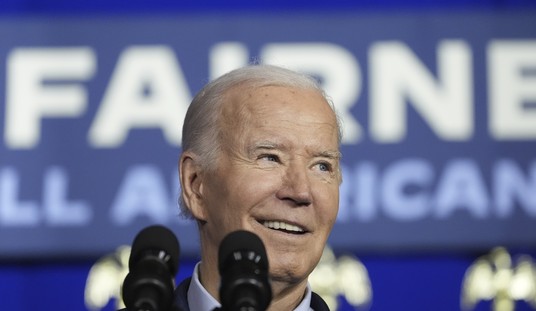
All of which left Barack Obama looking somewhat ridiculous when he called for more taxes in his televised speech Monday night. When you're trying to show you're leading and your followers have already gone off in another direction, you tend to look like something other than a leader.
Recommended
Some Democrats, in frustration, have said House Republicans are acting "almost like a dictatorship" or are using "terrorist tactics." But in opposing tax increases, House Republicans are just being true to the voters who gave them in November 2010 a larger majority than they have won since 1946.
Other Democrats have taken to blaming Obama. Robert Reich, labor secretary in the Clinton administration, decries an empty bully pulpit. Paul Krugman, the trade economist who writes partisan vitriol for The New York Times, talks about a centrist copout.
Such complaints seem to ignore a lesson that Democrats were happy to teach Republicans after November 2008: Elections have consequences.
Our Constitution does not allow the Republicans, who won big in 2010, to immediately repeal Obamacare and pare back spending to 2007 levels, and they're pretty frustrated about that. Enough of them remained obdurate to prevent Boehner's bill from passing Thursday and to push him to include a provision supposedly forcing passage of a constitutional amendment requiring a balanced budget.
All of which weakens Boehner's bargaining position and may mean a final bill less tilted to Republican demands. But, as many Democrats note, the battle is being fought over how much spending to cut, which means that Republicans are winning. The question is just how much.
Democrats went into this fight with a precedent in mind, the budget fight between President Clinton and Speaker Newt Gingrich in 1995-96. The conventional wisdom is that Clinton won that fight and Republicans lost.
That's not quite right: After shifting to noticeably more moderate policies, Clinton was re-elected in 1996, but Republicans lost few House seats and held onto their congressional majorities at the same time.
The difference this time is that Obama has not shifted policies noticeably, but instead has seemed to position himself as a complainer on the sidelines, asking voters to call their congressman. He has presented no specific plan of his own. His chief of staff reports that he hasn't spoken at all to Boehner lately.
Just as he left the specifics of the stimulus package and Obamacare to congressional Democrats, so he has left the framing of an alternative to Harry Reid, whose Senate Democrats haven't passed a budget resolution in two years.
On Friday, the Gallup poll showed Obama's job approval down to 40 percent, the lowest of his presidency. Voters are cross with everybody, but he has the most to lose.



Join the conversation as a VIP Member