
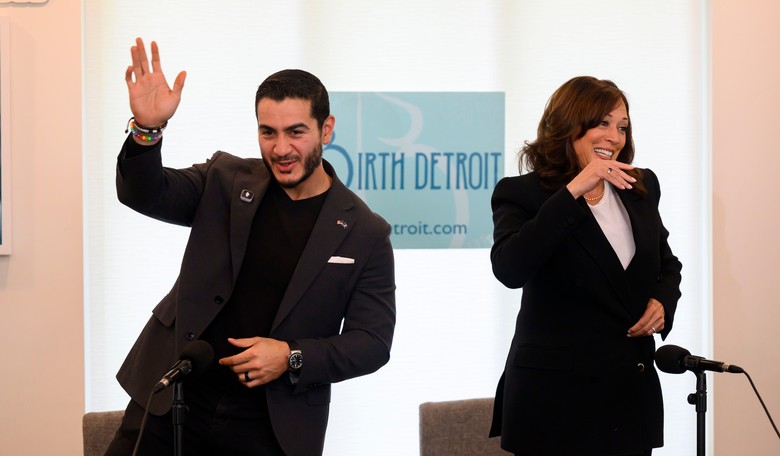
Democrat nominee for the Senate in Michigan, Abdul El-Sayed, in a nationally televised news program, described ‘Medicare for All’ as “…guaranteed health insurance from cradle to the moment you pass away. It comes without premiums or co-pays or deductibles. It guarantees you care when you need it. This is a level of security we have never known in the United States.”
This is a slick snake oil salesman trying to convince you that there is a good fairy bringing you utopia for nothing.
El-Sayed and many others ignore key important issues. What does it cost, and how do we pay for it? If they would examine the countries that have national health insurance in various forms, they would know not one works as he described. All have rationing of services and long waits for procedures needed. In every case, there is more demand for services than supply of doctors, hospitals, nurses, etc. to fulfill the demand. And they all have some kind of fee for services.
The Cato Institute has done an analysis of what all the ‘free’ services might cost; ‘Medicare for All’ is just one of the programs. There is ‘free’ tuition, child care, senior care, reparations, etc. – a long wish list of benefits. Their estimate for a 10-year period ranges from a low of $71 trillion to a high of $222 trillion. The assumptions vary widely, but the least expensive alternative is almost double what the U.S. spends now on everything. The total expenditures for 2026 fiscal year were $7.4 trillion.
So, how do we pay for it?
Tax the rich? Cato also studied that option. They found the only problem with that is there isn’t nearly enough money among the wealthy on any reasonable tax increase to come close to paying for it. Wealth Taxes? Sorry, that has been tried in a dozen countries and repealed because it doesn’t work either. In France, for example, they repealed it after 75,000 of their wealthiest left, and they discovered that they lost more in regular taxes than they gained in the wealth tax.
Some countries offer many of the social programs often held up as models for the United States. Sweden, a Scandinavian country frequently cited as an example, is one of them. But how does Sweden pay for these programs? The answer is through significantly higher taxes on income, retirement, consumption, and gasoline.
Sweden’s income tax starts at 32 percent, with the rate rising to 52 percent on income above $62,000. By comparison, the U.S. federal income tax rate tops out at 22 percent for income up to $103,000, although higher federal tax brackets apply to income above that level, but none get close to 52 percent.
Retirement taxes are another major difference. In Sweden, employers pay a pension contribution of 32 percent on the full amount of wages. In the United States, Social Security taxes total 12.4 percent, split equally between employers and employees, and apply only up to an annual earnings cap, which was $184,500 in 2025.
Sweden also relies heavily on a value-added tax, or VAT, which functions much like a national sales tax on goods and services. The standard rate is 25 percent, although certain items, including food, are taxed at lower rates. The overall effective rate averages 19 percent. The United States, by contrast, has no national sales tax. However, most states have a sales tax, which averages roughly six to seven percent.
Gasoline provides another example of the difference. On a given date, a gallon of gasoline in Sweden costs approximately $7.19, compared with $4.47 in the United States. The difference reflects Sweden’s higher fuel taxes.
Generous public programs do not pay for themselves. Sweden funds its many social benefits through a substantially higher tax burden on everyone — workers, employers, and consumers. Americans considering whether to adopt similar programs should weigh not only the benefits they promise, but also the taxes required to sustain them. Our snake oil salesmen conveniently ignore this issue.
The national health service doesn’t work quite like the snake oil salesman from Michigan suggests. In Sweden and most countries that have some form of universal medical care, there is rationing of medical services and long waits for many procedures. And there are fees required for all visits, typically from $20 to $40 for routine visits. And there is a growing reliance on private health insurance (13 percent have this), because that is the way you can get your needs fulfilled on a timely basis. Many of their companies offer private insurance as an inducement to employment.
If you want all those ‘free’ programs, just understand you will be paying a lot for them. There is no free lunch, so quit looking for it.
Les Rubin is the founder and president of Main Street Economics.