
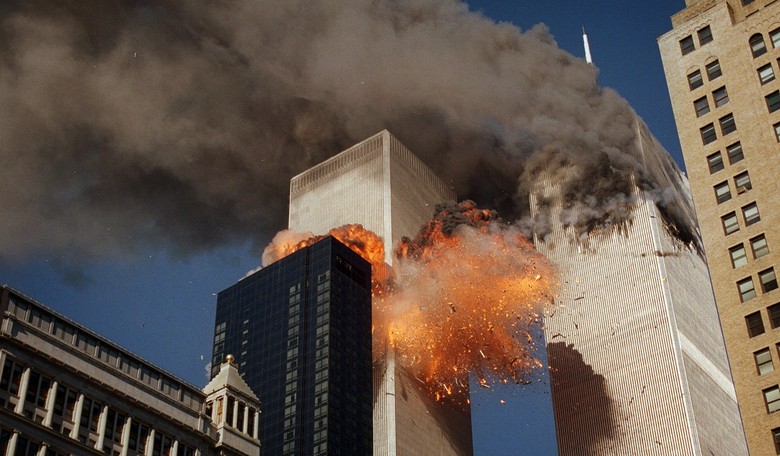
One weekday morning about a decade ago, I was at St. Patrick's Cathedral on Fifth Avenue in New York City, waiting in line to go to confession. My pre-sacrament reverie was broken by the sight of a seemingly heavily armed man. This particular day came during the height of the Islamist terror groups' threats on Christian churches and the United Nations' annual General Assembly week in Manhattan.
I remember thinking: "This is not normal. Is this what it's like for my Jewish neighbors every Sabbath?"
It echoed what I thought at some point during the morning of 9/11: "Is this what it's like to be an Israeli Jew?"
This all comes to mind for the obvious reason that remembrance is in the air as we mark the 25th anniversary of the 9/11 attacks. Meanwhile, Israelis are about to mark the third anniversary of those horrific attacks on the Nova music festival. Just as 9/11 was an attack on all Americans, 10/7 was an attack on every Jewish man and woman the world over. Antisemitism is a grave evil. One that must be acknowledged in a common solidarity among people of good will.
The hatred of Jews is uniquely pernicious, having persisted for more than a thousand years. And it's rising again. There are news stories about renewed fear. With that comes resolve, too, about what matters most, and not just for those who are specifically targeted on their Sabbath or kosher cafe or festival.
"Jews and Christians share an immense spiritual patrimony, flowing from God's self-revelation," Pope John Paul II said when he spoke at Yad Vashem in Jerusalem in the millennial year. "Our religious teachings and our spiritual experience demand that we overcome evil with good. We remember, but not with any desire for vengeance or as an incentive to hatred. For us, to remember is to pray for peace and justice, and to commit ourselves to their cause. Only a world at peace, with justice for all, can avoid repeating the mistakes and terrible crimes of the past."
When you notice a police car outside of your local synagogues, acknowledge that it takes your Jewish neighbor courage to go to temple services, to wear a kippah, or to make the sacrifices that come with keeping kosher in mainstream daily life.
The sentence "We are all Israelis now" can sound trite because such formulations have come to be overused — see the recent TikTok videos supporting Lindsay Clancy as a recent example. But we should insist the trope remain a rallying cry — because an attack on a Jew for being a Jew is an attack not only on religious freedom but humanity itself.
It feels so insufficient, but many of my Jewish friends told me that a simple "I'm sorry" or "I'm praying for you" directed their way after Oct. 7 three years ago was appreciated. Shalom, my friends. And may we prosper together in humble gratitude to God.
Kathryn Jean Lopez is senior fellow at the National Review Institute, editor-at-large of National Review magazine and author of the new book "A Year With the Mystics: Visionary Wisdom for Daily Living." She is also chair of Cardinal Dolan's pro-life commission in New York and is on the board of the University of Mary. She can be contacted at klopez@nationalreview.com.