
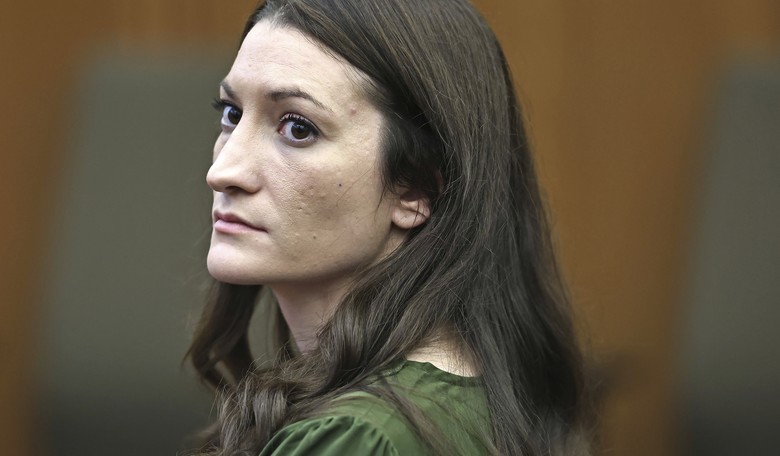
The mistrial in the Lindsay Clancy case should disturb every American who believes that human life is sacred and that human beings are morally responsible for what they do.
Clancy admitted killing her three young children. The prosecution argued that the killings were deliberate and planned. Prosecutors pointed out she arranged for her husband to leave the house, even checking how long his errands would take, thus creating a window in which she could carry out the killings. Prosecution experts testified that her conduct was consistent with someone who absolutely understood what she was doing.
The defense argued that Clancy was suffering from postpartum psychosis and therefore lacked criminal responsibility. After 38 hours of deliberation, the jury could not reach the unanimous verdict required by Massachusetts law, and the judge declared a mistrial.
Reports indicate the jury was divided 11-1, with most jurors apparently favoring a finding that Clancy was not criminally responsible.
That is not, legally speaking, an acquittal. A retrial remains possible. But culturally, something profoundly troubling has already happened.
The modern therapeutic culture teaches us to interpret nearly every destructive act through the vocabulary of trauma, diagnosis, victimhood and dysfunction. Sometimes those explanations are legitimate and indispensable. Severe mental illness is real. In locked-door psychiatric hospitals, I have counseled persons genuinely suffering from clinical psychosis. Human suffering (including mental illness) is real. Christians should be among the first to recognize these truths, because we believe in caring for the suffering and defending the vulnerable.
But compassion is not the same thing as moral relativism, nor should it be an excuse to casually ignore personal accountability. Recognition of moral agency and accountability is especially crucial when premeditation is undeniably present. Mental illness must not become the ‘default’ synonym for innocence.
The American Constitutional and legal system once stood for a radically different understanding of the human person.
Our Declaration recognizes that every human being bears the image of God. That is why the three children killed in this case possessed immeasurable worth. Their lives were not less valuable because they were young, dependent, or unable to defend themselves. Cora, Dawson and Callan were not abstractions in a debate about maternal mental health. They were children made in God's image.
That truth must remain at the center of this discussion.
If human life has inherent dignity, then it has dignity after birth, in childhood, in sickness, in disability and in dependence. Every unborn child deserves legal protection before delivery and also deserves protection from violence once they are born.
We should not be afraid to say another uncomfortable truth: human beings are moral agents.
Our society increasingly wants to have it both ways. We insist that people are autonomous enough to make choices when doing so advances personal freedom. But then defense attorneys (and public opinion) paint people as “victims of circumstances” when their choices become horrifying.
We celebrate personal agency in daily life and abolish it in defense trials.
The insanity defense exists for a reason. There are genuinely psychotic people who cannot understand reality or exercise meaningful control over their conduct. In 35 years of pastoral care and visits to dozens of maximum-security prisons, I have met a few of them.
Justice should distinguish between a person who deliberately commits evil and someone whose mind has been catastrophically overtaken by disease. But the existence of some legitimate cases does not mean every case that may potentially touch on mental illness should be transformed into a case of diminished responsibility.
The Clancy case is illustrative of our national drift from recognizing personal responsibility. We have built an enormous therapeutic vocabulary for explaining behavior, but explanation can quietly become exoneration. One expert witness for the defense can articulate a speculative diagnosis that becomes a moral solvent in the minds of jurors, dissolving responsibility altogether.
Christians understand this tension better than most. Scripture is remarkably realistic about human weakness while remaining uncompromising about human responsibility. We are fallen creatures, shaped by circumstances and afflicted by sin, yet still accountable before God. Mercy does not require us to pretend that evil is not evil.
The Bible says, in Romans 14:12, that “each of us will give an account of himself to God.” That is not a denial of human brokenness. It is a recognition that brokenness does not erase personhood or responsibility.
And neither should our courts erase responsibility merely because responsibility makes us uncomfortable.
Whatever ultimately happens in the Clancy case, America should resist the temptation to turn murder into merely another chapter in the therapeutic narrative. We should care for the mentally ill. We should improve maternal mental-healthcare. We should investigate failures in medicine and treatment. We should show genuine compassion to families confronting devastating psychiatric disorders.
But we must also defend the dead.
We must defend the principle that children are precious, that murder is evil, that justice matters, and that being human means being capable of moral responsibility.
A civilization that cannot say those things plainly will eventually discover that compassion without accountability is not compassion at all. It is surrender.
The children cannot speak for themselves. We must speak for them.
And we must never allow the language of therapeutic culture to make us forget that their lives mattered.
Dr. Alex McFarland is an apologetics evangelist who has spoken in hundreds of locations throughout the U.S. and internationally. He is heard live on “Exploring the Word,” airing daily on 200+ radio stations across the country. “The Alex McFarland Show” airs weekly on NRBTV, providing Biblically faithful TV and discussion on current events affecting our nation. His newest book, “100 Bible Questions and Answers on Prophecy and the End Times,” is available now.