
Some people are the best at what they do but are total jerks as people.
Fugu, or pufferfish, is not kosher. That’s good news for me. As it is not relevant for my consumption, I don’t have to rely on an expert chef to remove the poisonous venom in order to enjoy a famous Japanese delicacy. There are some things that can be separated; there are other things in life that apparently cannot.
If I could expand my list of fly-on-the-wall encounters, I would add a 1948 meeting between General of the Army Dwight Eisenhower and General Leslie Groves, builder of the Pentagon and leader of the successful Manhattan Project. The latter wanted to be appointed as Chief of Engineers of the Army. It would have been the pinnacle of his career and the logical final stop after such meteoric success. Ike said nothing doing. He reviewed Groves’ evaluations from those who worked under him on the creation of the bomb. They universally described him as being successful in pushing forward a difficult and complex project. They also described him as a bully, one who was short with people and often addressed them in a belittling manner. One fellow who worked on the bomb later said in an interview that the general was rude, overbearing, and mean — but there was no one else under whom he would have wished to work on the bomb project. And this is a conundrum: can one perform a Fugu and remove the bad character traits from people who are professionally successful at the absolute highest levels?
Names that come to mind from the past century include Groves, Admiral Hyman Rickover, General George Patton, Steve Jobs, and Bill Gates. These are by no means the only candidates for this class of humans, but they all share two features: they were the best at what they did, and as people they were often rude, difficult, mean, selfish, and petty. Someone might wish to add Donald Trump to this list, but we are aware of his many acts of kindness and displays of sensitivity toward others. As to the list here, each was a champion in his field. Rickover invented and grew the nuclear navy. Patton has been considered one of the best field commanders that the U.S. has ever produced. Steve Jobs revolutionized consumer electronics, and for better or worse, Bill Gates has made software that is on computers throughout the world.
I am currently reading Walter Isaacson’s tome on Jobs. Like virtually all human beings, Steve Jobs was a complex creature. He could be generous and encouraging; he could also be ruthless and petty. In a visit to New York prior to the release of the original Macintosh, he arrived at his hotel and demanded that the flowers present in his suite be replaced with calla lilies and that the piano be moved prior to a planned photo shoot. The woman in charge of taking care of his needs found a flower shop open at 10 PM in Manhattan. He later complained about the appearance of the room and even that the dress that this assistant was wearing was “disgusting.” The question is, could we have the exacting demands of the Mac — and the iPhone, iPad, etc .— without the same demanding behavior over the types of flowers present in a high-end hotel room? If I entered a hotel room and there were fresh flowers present, I would probably break down in tears of joy. But for Jobs, everything had to be perfect, and this demanding approach led to successful Pixar movies and the iPod devices that revolutionized digital music. If Jobs had suddenly become the nicest guy in the world, would he also have been able to produce the iPhone — which he famously demanded have a glass screen even after a million of them stood ready for shipping in China with a plastic screen? He famously said that he would not have a screen that could be scratched and had all of those screens replaced with Gorilla Glass prior to the revolution started by the first iPhone.
After Ike shot down General Groves’ dream, he chose to retire from the Army. He was awarded his third star for service and then finished his career as a vice president at Sperry Rand. The physically imposing Groves could bully his way to getting what he wanted, but at what price? Once the war was over, most of his scientific staff left Los Alamos and returned to their universities and corporate labs. It is highly unlikely that anyone other than Groves, working with the more relaxed Oppenheimer, could have built massive factories, corralled needed resources, and goaded scientists to go from theory to working atomic devices in only a few years. He had a mandate to produce a working bomb while the war was on. When he started, atomic research was barely beyond the original paper describing uranium breaking down into smaller atoms. When Germany surrendered, he effectively lost his primary target. He continued to push the scientists and engineers and succeeded in producing and dropping two atomic bombs, with a third one already in preparation for delivery at Tinian Island. Could Groves have taken some Xanax and still gotten his working devices in time? His bluster and force of personality appear to have been critical in getting the job done on time.
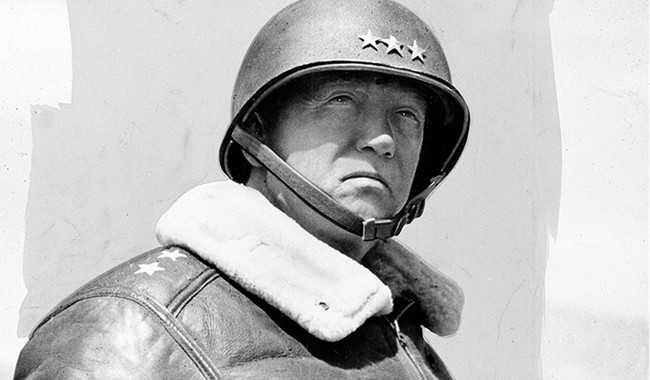
The same Patton who moved his army 280 miles in one day was the same one who slapped soldiers suffering from shell shock. The same Patton who saved the day at Bastogne when the Battle of the Bulge was hanging in the balance was the same Patton who compared defeated Nazis to Democrats and Republicans. His aggressive style made him the most respected general in the eyes of the Germans; it also made him a headache for Ike at various points during the war. It would be nice if he had been a gentleman as Admiral Chester Nimitz appears to have been, but Patton — and five-star admiral Bill “Bull” Halsey — were tough cookies and would never have been candidates for Miss Congeniality.
Bill Gates is associated with the rise of the personal computer from IBM’s first home computers (which we had with its green letters, difficult commands, and prompt arrows before the days of the mouse). He is fabulously wealthy and has Microsoft products all over the world. He was also a close associate of Jeffrey Epstein. There is something about his getting sick from Russian prostitutes. He was running simulations of the spread of a COVID-type virus immediately before the real thing escaped Wuhan. He has been pushing bugs in place of real meat. So if Bill Gates, in his 20s, became the nicest guy in the world, would we still have Windows and the Office suite of programs we all use? I wish I could say with confidence that we would. One definitely does not have to be a jerk to be successful. There are many people who have led their fields in business, science, sports, and beyond who were honest, friendly, and approachable. But for these specific individuals, I don’t know if one could easily remove the bad character traits and not expect to damage the very drive they had to make the products or progress that made them famous. Could a Patton who did not slap the soldiers also take Trier, Germany, with two divisions when he was told not to try with fewer than four? Patton asked if he should return the city to the Wehrmacht.
I do not believe that personal success gives a person a right to be a jerk toward others. I do think that some of the best cannot be easily dissected and converted into pleasant fellows who would have achieved the same level of stratospheric success.