
Calling Katie’s death “just a DUI” is more than technically convenient. It is an act of absolution.
A DUI happens every day. The driver made a terrible decision. The government had nothing to do with it. What could anyone have done?
That is the problem.
Calling it a DUI allows Illinois to absolve itself of everything that came before the crash. It cuts off responsibility before anyone asks the harder questions:
Why was the previously deported immigrant who killed Katie allowed to be in this country? How was he able to return after deportation under a false identity? How did he obtain an Illinois driver’s license? What systems failed? Who knew? Who should have known? And who accepted the risks created by those failures?
The label “DUI” identifies the final act. It does not absolve everyone whose decisions and policies preceded it.
The driver has responsibility for the crash. Government has responsibility for the systems that made the circumstances possible.
Those are not mutually exclusive.
When a bridge collapses, engineers don’t point to the piece that broke and say, “Case closed.” They investigate why it failed, whether warnings were missed, and whether decisions increased the risk.
Katie’s death deserves the same scrutiny.
And that brings us directly to immigration policy.
The Biden-Harris administration created an open border in practice.
The border was overwhelmed. Millions entered illegally. Enforcement was weakened. People were released into the country in numbers the government could not realistically track, detain and remove.
The administration knew the immigration courts were overwhelmed, detention capacity was limited, and removal proceedings could take years. It knew many released into the country would never be removed.
And it kept doing it.
That wasn’t an accident.
Either they understood the risks and accepted them, or they were so incompetent that they couldn’t understand the consequences of their own policies.
Neither is acceptable when public safety is your job.
Then Donald Trump returned to office and did something remarkably simple:
He started enforcing the law.
Secure the border. Detain people who entered illegally. Remove people who have no legal right to remain. Prioritize removing criminals. Work with state and local law enforcement instead of tying their hands.
That isn’t radical.
It is what a functioning government is supposed to do.
Responsible state and local authorities that understand their first obligation is public safety should want that partnership, not barriers that prevent them from sharing information or acting when a dangerous person enters the justice system.
And now many of the same voices who defended, minimized or ignored the consequences of the Biden-Harris administration’s immigration policies want to lecture everyone about compassion.
Where was that compassion during those four years?
There was nothing compassionate about an immigration system that produced dangerous journeys, exploitation, trafficking and death for migrants while communities and victims bore consequences that too often went unacknowledged. There was nothing compassionate about telling Americans the border was secure, people were being vetted and screened, and the system was under control while the consequences mounted.
Compassion should never be selective.
It should extend to migrants, to Americans, to communities, and especially to victims and their families.
You don’t get to spend four years dismissing enforcement concerns and then suddenly discover the victims when a new administration begins enforcing the law.
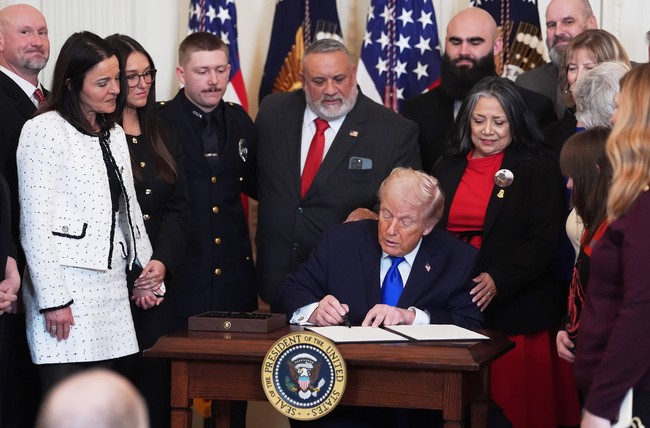
That is why the return of the VOICE office matters.
VOICE exists to make sure victims are not lost in the immigration debate. It gives victims and families a place to be heard, receive information, navigate systems that can feel indifferent, and know their government sees what happened.
That matters because for too long, the immigration debate became almost entirely about the person entering illegally: What do they need? What protections do they deserve? What services should they receive?
The victim became an afterthought.
A statistic.
A footnote.
Katie will never be a footnote to me. Neither will the other young woman who died that night. Neither will the three people who survived with serious injuries.
They are the other side of the ledger.
And that ledger has been grotesquely out of balance.
You don’t get to overwhelm an immigration system you know cannot remove the people entering it and then pretend you had nothing to do with what follows.
And this is not only a federal problem.
Illinois is losing its citizens, and instead of confronting the failures driving them out, it has chosen policies that can preserve population, federal funding, political apportionment and political power as citizens leave.
That is the easy way out.
You cannot lose your population and then simply replace the numbers with people who have entered the country illegally and pretend nothing has changed.
That is not leadership. It is political accounting.
And political accounting has a human cost.
Katie was not supposed to be the price Illinois paid to preserve political power.
No child should ever be sacrificed for political power, federal dollars or an election strategy.
Katie paid with her life. Her family will pay for the rest of ours.
That is the ledger. And it should never be allowed to balance that way again.
Katie was killed by a drunk driver.
But that does not mean we stop asking what happened before that intersection.
The driver made the final decision. He owns that decision.
But government owns its policies.
When government creates conditions in which foreseeable risks become reality, government has a responsibility to examine those decisions, and to listen to the victims left behind.
Maybe officials knew what could happen and accepted the risk. Maybe they lacked the foresight or competence to understand it.
Either way, they should answer for the choices they made and the risks they accepted.
Because Katie cannot answer them.
So I will.
And I will keep asking until someone does.