
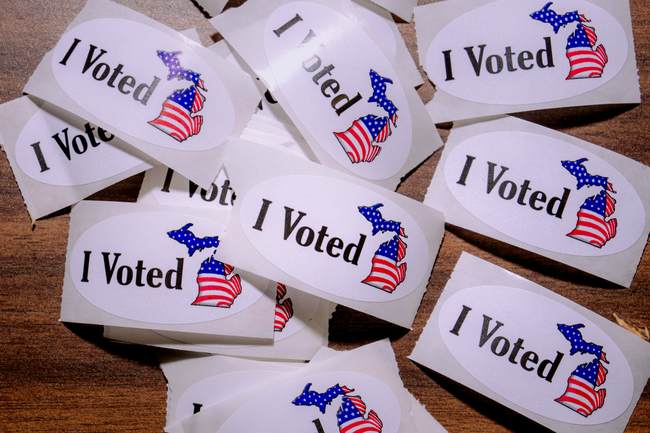
Michigan is once again one of the most closely watched battleground states in the country. And if candidates want to know who could ultimately decide some of the state’s closest races this November, they should pay close attention to voters age 50 and older.
New AARP polling shows these voters are engaged, motivated and ready to make their voices heard.
An overwhelming 86 percent of Michigan voters age 50-plus rate their motivation to vote this November a 10 on a 10-point scale, compared with 71 percent of voters under 50. Among voters 65 and older, that number rises to 89 percent.
And in races that could be decided by just a few percentage points, those voters matter.
The open U.S. Senate race is essentially tied. Democrat Abdul El-Sayed receives 48 percent and Republican Mike Rogers 47 percent among likely voters. Among voters 50-plus, however, Rogers leads 52 percent to 43 percent.
The race for governor looks different. Democrat Jocelyn Benson leads Republican John James 49 percent to 44 percent statewide, while voters 50-plus are nearly evenly divided, with James at 48 percent and Benson at 47 percent.
But one of the most interesting findings in our poll is what happens when you look at older voters who aren’t voting a straight party ticket.
Fourteen percent of Michigan voters 50-plus fall into this category, representing a potentially decisive 8 percent of the state’s overall electorate. Those voters favor Benson by 28 points in the governor’s race — and Rogers by 33 points in the Senate race.
That’s a powerful reminder that older voters aren’t a monolithic voting bloc. Candidates have to earn their support.
And our poll gives us a pretty good idea of what these voters want to hear about.
Rising prices and affordability are the top issues for Michigan voters heading into November. Groceries lead the list of affordability concerns, followed by healthcare, gasoline, and utility costs. More than half of Michigan voters overall say they are worried about their personal financial situation.
For older voters, Social Security is also front and center.
Eighty-six percent say Social Security is extremely or very important when deciding their vote. That includes 78 percent of Republicans, 85 percent of Independents, and 96 percent of Democrats age 50-plus. Nearly six in ten say Social Security is or will be a major source of income in their household.
These voters know what’s at stake. They have paid into Social Security throughout their working lives, and they expect Washington to keep its promise.
Ninety-three percent of voters 50-plus say they would be more likely to support a candidate who advocates to ensure workers get the Social Security they paid into and earned through a lifetime of hard work. And 82 percent would be more likely to support a candidate who protects Social Security from cuts, including reductions in payments, smaller annual increases, or raising the retirement age.
Family caregiving is another issue candidates shouldn’t overlook. Half of Michigan voters 50-plus say they are or have been a family caregiver. Nearly three-quarters say they would be more likely to support a candidate who backs policies helping unpaid family caregivers keep their loved ones living independently at home.
At AARP, we don’t tell people which candidates to vote for. We make sure voters know where candidates stand on the issues that matter to them — and we make sure candidates know the power of voters 50-plus.
Our latest Michigan poll sends them a clear message: These voters are going to show up. They’re looking closely at the issues. And their votes are up for grabs.
In a state where close elections have become the norm, candidates who want to win Michigan can’t afford to ignore them.
View the full survey results at www.aarp.org/mi2026voterpoll. Additional information about AARP’s 2026 battleground polling series is available at www.aarp.org/voterpolls2026 and aarp.org/mipoll.