
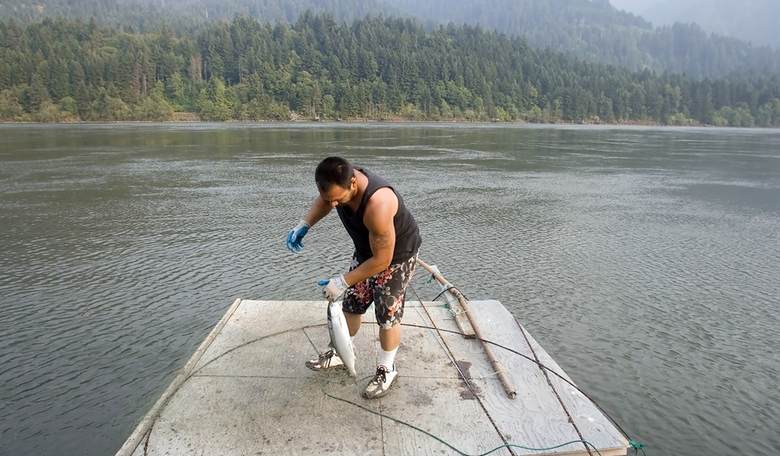
The effort to ban hunting and fishing in Oregon has crashed and burned after the campaign failed to get the required number of signatures to put the issue on the ballot.
Supporters of Initiative Petition 28, known as the PEACE Act, submitted 142,784 signatures by the July 2 deadline. It needed 117,173 valid signatures to appear on the ballot. After two rounds of statistical sampling and verification, the Elections Division determined that only 104,262 signatures, or 73.25 percent, were valid, according to Willamette Week. That left the effort about 13,000 signatures short.
Oregon Secretary of State Tobias Read’s office announced the result last week.
The measure, formally titled the People for the Elimination of Animal Cruelty Exemptions Act, would have amended Oregon’s animal cruelty statutes. The campaign aimed to remove longstanding legal exemptions that currently allow hunting, fishing, trapping, livestock slaughter, common animal husbandry practices such as castration and dehorning, pest control, scientific research on animals, rodeos, and commercial poultry operations.
NSSF-Opposed Oregon Anti-Hunting Ballot Initiative Fails
— Firearms Guide (@FirearmsGuide) July 28, 2026
An Oregon anti-hunting ballot initiative opposed by NSSF®, The Firearm Industry Trade Association, failed to gather enough certified signatures to be considered by voters. Oregon's Initiative Petition 28 (IP 28), called… pic.twitter.com/s0dJ5xzE4X
Under the ballot measure, protected animals would have included any nonhuman mammal, bird, reptile, amphibian or fish. Intentional injury or killing of those animals would have become a crime except in cases of self-defense against an immediate threat or good veterinary practices.
The proposal also would have created a Humane Transition Fund to provide income replacement, job retraining and food assistance for people affected by the changes. This was the third attempt by chief petitioner David Michelson, a Portland substitute teacher, and fellow petitioners Isaac Farias and Sean Rice to place a similar measure before voters. Earlier versions fell short of the signature threshold for the 2022 and 2024 elections.
IP28 failed to turn in enough verified signatures and did NOT make the ballot! Hunting, fishing, trapping, ranching and farming is safe for the moment. See new IP25 to make these actions a right in the Oregon Constitution. Oregonians please sign up to volunteers or donate. pic.twitter.com/AQstA9Oqg1
— Oregonians Against The PEACE Act (@OreAgainstPEACE) July 25, 2026
The campaign began circulating the current version after it was approved in 2024, and supporters raised more than $300,000, much of it from out-of-state animal rights donors.
Reactions crossed party lines. “I’m relieved IP-28 failed to qualify for the November ballot,” Gov. Tina Kotek said. “Efforts to criminalize activities like hunting and fishing are wrong for Oregon. I know from conversations with Oregonians across the state that this measure would have done nothing to help them. This is a win for tribal leaders, family farmers, ranchers, and every Oregonian who cares about protecting our lands and wildlife.”
All 37 Oregon House Democrats opposed the measure earlier, stating that criminalizing farming, ranching, hunting and fishing is wrong and ignores the treaty rights of Oregon’s nine federally recognized tribes.
Todd Adkins, executive director of the Oregon Hunters Association, said, “This is a massive victory for everyone who values Oregon’s wildlife management and outdoor heritage, but we cannot afford to simply celebrate and wait for the next attack.”
Supporters viewed the signature drive itself as progress. “We know that this is unlikely to pass in 2026,” Michelson said in a previous interview. “No one on the campaign thinks that this will pass right now.”
This is a great development. The animal rights lobby has been stopped for now. But, as Adkins suggested, they will not stop pushing these measures until the rest of the country is forced to adhere to their twisted ideology.
It’s always been their ultimate goal.
The animal rights movement masquerades as a group of people who just want to protect vulnerable animals. In reality, their objective is to use government force to ensure that people can’t own, farm, or eat animals. They have already made progress in this effort—criminalizing people over non-humans.
If these people get their way, they will empower the government to punish people for hunting, fishing, and a host of other behaviors.