




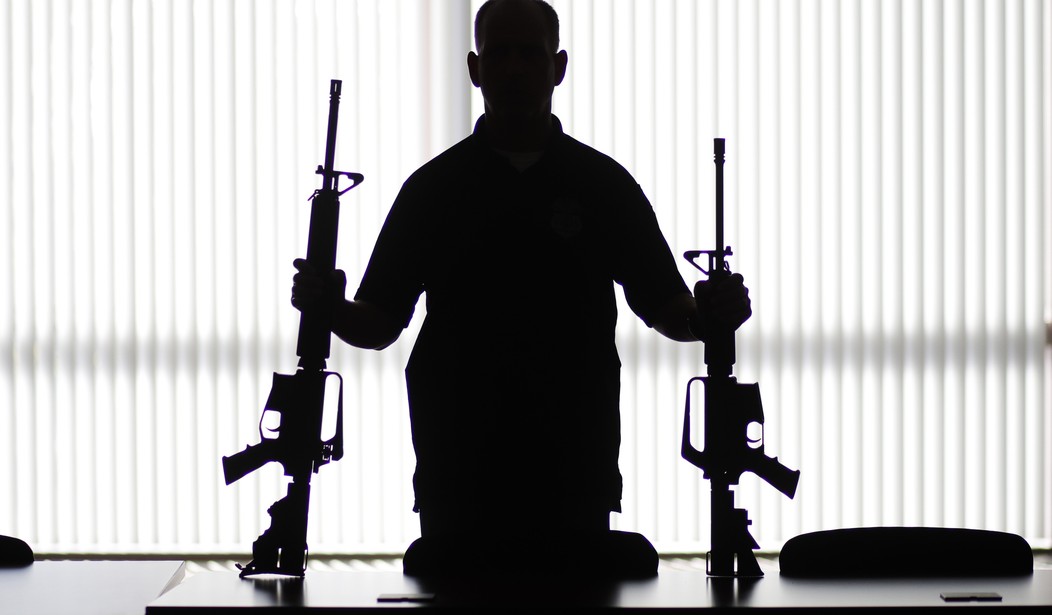
The United States Supreme Court (SCOTUS) will hear a case surrounding President Joe Biden’s policies cracking down on “ghost guns.”
According to a Monday report from the Associated Press, the justices took up an appeal from the Biden administration after a lower court invalidated the regulations. The rules are currently in place as litigation goes forward (via AP):
The regulation, which took effect in 2022, changed the definition of a firearm under federal law to include unfinished parts, like the frame of a handgun or the receiver of a long gun, so they can be tracked more easily. Those parts must be licensed and include serial numbers. Manufacturers must also run background checks before a sale, as they do with other commercially made firearms.
The requirement applies regardless of how the firearm was made, meaning it includes ghost guns made from individual parts or kits or by 3D printers. The rule does not prohibit people from buying a kit or any type of firearm.
Townhall previously reported that SCOTUS said it would allow the Biden administration to continue regulating “ghost guns,” which are firearms that are privately assembled and untraceable, as the policies were challenged in court.
"While this case is being litigated, the Supreme Court's action will keep in place important efforts to combat the surge of unserialized, privately-made 'ghost guns' which have proliferated in crime scenes across the country," Olivia Dalton, White House principal deputy press secretary, said in a statement after the order came out.
Recommended
Biden’s policies surrounding restrictions on "ghost guns" were announced in April 2022. In remarks from the White House at the time, President Joe Biden said: "If you commit a crime with a ghost gun, expect federal prosecution” (via The White House):
Last year alone, there were approximately 20,000 suspected ghost guns reported to ATF as having been recovered by law enforcement in criminal investigations – a ten-fold increase from 2016. Because ghost guns lack the serial numbers marked on other firearms, law enforcement has an exceedingly difficult time tracing a ghost gun found at a crime scene back to an individual purchaser.
This final rule bans the business of manufacturing the most accessible ghost guns, such as unserialized “buy build shoot” kits that individuals can buy online or at a store without a background check and can readily assemble into a working firearm in as little as 30 minutes with equipment they have at home. This rule clarifies that these kits qualify as “firearms” under the Gun Control Act, and that commercial manufacturers of such kits must therefore become licensed and include serial numbers on the kits’ frame or receiver, and commercial sellers of these kits must become federally licensed and run background checks prior to a sale – just like they have to do with other commercially-made firearms.
The final rule will also help turn some ghost guns already in circulation into serialized firearms. Through this rule, the Justice Department is requiring federally licensed dealers and gunsmiths taking any unserialized firearm into inventory to serialize that weapon. For example, if an individual builds a firearm at home and then sells it to a pawn broker or another federally licensed dealer, that dealer must put a serial number on the weapon before selling it to a customer. This requirement will apply regardless of how the firearm was made, meaning it includes ghost guns made from individual parts, kits, or by 3D-printers.




Join the conversation as a VIP Member