







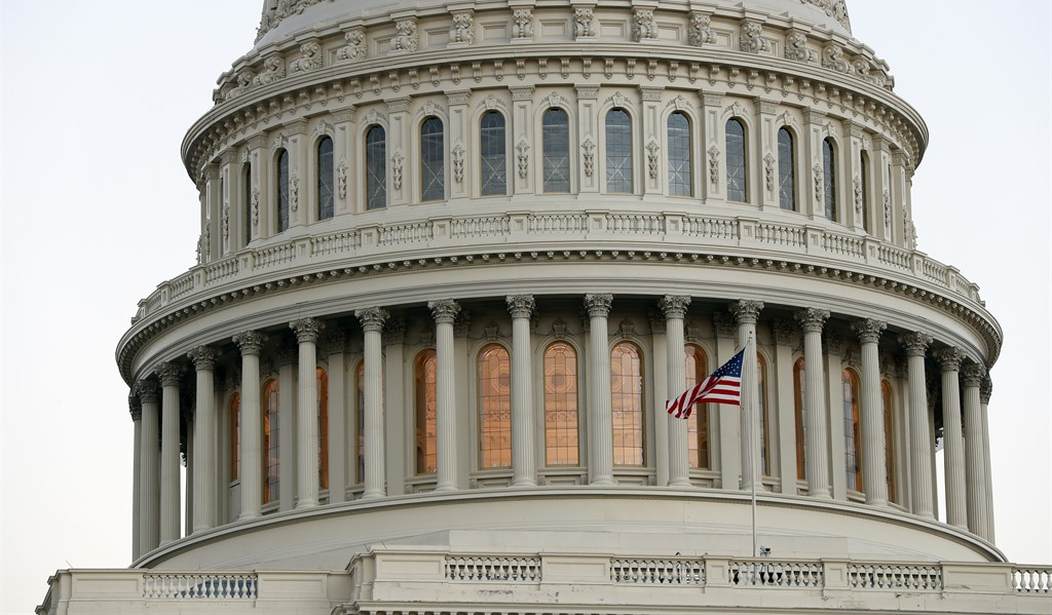
Sen. Elizabeth Warren has reignited the debate over the Electoral College -- she wants to get rid of it, naturally. I say "reignited" because this is a very old argument. To paraphrase Billy Joel, Warren didn't start this fire; this debate's been burning since the world's been turning. But I'm going to skip rehashing the usual -- and to my mind, persuasive -- arguments in favor of the Electoral College.
Arguments against it tend to boil down to two gripes: It's very old-fashioned, and it's undemocratic.
In 2016, the last time we had this kerfuffle, "Handbook of Electoral System Choice" author Josep Colomer wrote in the Washington Post: "The U.S. electoral college is a medieval relic. ... The United States is the only country in the world to still use the system to elect a president."
Warren says she wants to get rid of the Electoral College because she wants "every vote" to matter. The widespread insinuation -- or the assumption -- is that this is how most enlightened democracies do it: a direct election of a single national leader.
That's nonsense.
First, most democracies don't have presidents like we do (or at all). We combine the head of state (the symbolic, generally weak representative of the nation) and the head of government (the person who actually calls the shots in politics).
The U.K. has a monarch (head of state), and a prime minister (head of government). Sometimes a legislative body picks the head of government or head of state. Sometimes voters pick one but not the other. In the Netherlands, the head of state is a monarch and the head of government is elected by the legislature (i.e., the majority party). In New Caledonia the head of government is elected by the legislature, and the head of state is the president of France. Go figure.
There are countries that combine both roles in one person -- Argentina, Indonesia, Mexico, Ghana, Brazil, Benin and a few others -- but no Western European country has a unified leader directly elected by the people.
Even this is misleading. As Elaine Kamarck of the Brookings Institution has observed, America is the only advanced democracy that has decided to strip its political parties of the power to select their own candidates. Until 1972 -- through conventions, smoke-filled rooms, etc. -- the parties, not the voters, determined who their presidential candidates would be. This function is among the informal checks and balances that make democracy workable around the globe; we scrapped it in favor of ever more open primaries.
America now suffers from a political paradox: This is one of the most partisan times in American history, but the parties have never been weaker. Abolishing the Electoral College would make parties even weaker by further incentivizing populist politicians to work outside the system to cultivate celebrity and cults of personality.
I think the way the Electoral College forces candidates to build broader coalitions across the nation is valuable. The way it minimizes the risks of interminable recounts and voter fraud (a single national tally would be a nightmare logistically) is important. But none of these things are essential by themselves.
What's essential is the ability to have some check on direct democracy and the centralization of power that comes with it. Our specific constitutional architecture isn't necessarily sacred, but the underlying idea behind it should be. The founders understood that democracy depends on some undemocratic mechanisms to maintain liberty. For instance, the Bill of Rights and the Supreme Court are not purely democratic. You can't vote away my right to free speech, for instance.
Most of our political problems today are a result of our political gatekeepers surrendering to the mob. All extreme political movements are hostile to restraints on their will. This is what unites the progressives who want to pack the Supreme Court, abolish the Electoral College and "reform" the "undemocratic" Senate and those on the right who celebrate President Trump's emergency declaration and other attempts to rule by fiat.
In a healthy democracy, leaders are answerable not just to voters but to legislatures, the courts, the states and parties. The decades-long trend has been to dismantle this arrangement to make presidents answerable to no one but the slice of electorate that voted for them. And even there, those voters are increasingly more interested in seeing their leader "win" than in holding them accountable. Abolishing the Electoral College would be another step toward a kind of national absolutism, which is an even worse medieval relic.

Join the Conversation
VIP members get the ability to comment on articles.