







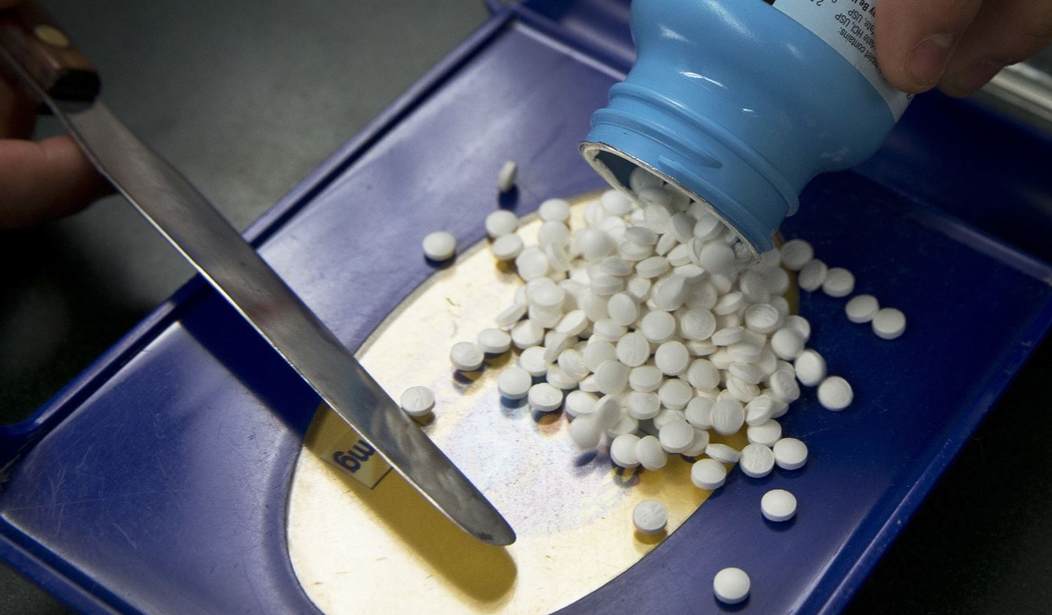
Earlier this month, President Trump signed an executive order to lower U.S. drug prices.
Cheaper prescriptions might sound great -- but there's a catch. The president's order would effectively impose European-style price controls on all drugs purchased by Medicare. These price caps would cut off Americans' access to soon-to-be-approved drugs and discourage the development of future treatments.
One of the many things that make America great is our world-leading medical innovation. In 2019, American scientists were working on roughly 4,500 new medicines, more than half of the 8,000 in development globally. The enormous size of our biotech industry explains why we now have a staggering 40 Covid-19 vaccines in clinical trials, less than a year after the virus first emerged.
This research would not be possible without the brilliant scientists at pharmaceutical companies of all sizes, from large multi-nationals to small startups.
It also wouldn't be possible without investors. It costs up to $2.6 billion and 10 years to develop a new drug. Less than 12 percent of potential treatments that enter clinical trials ultimately succeed.
Investors only take those enormous risks because of the potential rewards. At least in America, investors know that if they successfully create an FDA-approved medicine -- and that's a big if -- they'll be able to sell it for a fair price, recoup their upfront costs, and potentially turn a profit.
That profit motive propels science forward.
Price controls would upend this system. If companies stand little chance of earning a return on even the most successful, cutting-edge drugs, they'll struggle to raise funding from investors, who will flee to safer alternatives.
This isn't theoretical. Price controls have already gutted the research industry in other developed countries. The U.S. Department of Commerce estimates that foreign price controls reduce R&D spending by 11 to 16 percent annually.
And price controls don't merely discourage R&D -- they also deter manufacturers from launching their medicines in certain nations that offer unfairly low reimbursements. Americans currently have access to 96 percent of the 98 new cancer medicines launched since 2011. That's largely because Medicare, the single largest U.S. insurer, pays market-based prices for medicines covers virtually all FDA-approved drugs.
Patients in other developed nations, by contrast, only have access to 51 percent of those treatments.
House Democrats tried to pass price controls last year. Their massive H.R. 3 package would have tied all U.S. drug prices to the prices paid in Germany, the United Kingdom, and other reference countries.
The president wisely opposed those radical measures then. So it makes no sense for him to reverse course, copy the Democrats' scheme, and impose it throughout Medicare now.
President Trump undoubtedly means well. But implementing price controls -- which are proven to decrease the development of new medicines -- won't advance patients' long-term interests. In fact, it will needlessly put countless American lives at risk.
During the greatest public health crisis in 100 years, America needs to encourage medical innovation more than ever -- not embrace Europe's failed policies.
Drew Johnson is a columnist and government watchdog who serves as a senior fellow at the National Center for Public Policy Research.

Join the Conversation
VIP members get the ability to comment on articles.