



It’s in the nature of government to want to clamp down on information. You see it clearest in tyrannies.
In Burma, for example, the government aims to reduce the number of licensed teashops. Why? To decrease viewing of satellite television. Satellite TV dishes are already licensed in Burma, and the fee had recently been jacked up from $5 to $800. Teashops are just about the only place an average Burmese citizen can hear uncensored news. The Burmese junta really, really does not want Burmese people to be informed about freedoms — or dangers — elsewhere.
But we don’t need to go looking beyond our borders for this kind of over-reaching nonsense. Look no further than New York City.
The city’s deputy commissioner of counter-terrorism has this hankering to clamp down the private ownership of devices that measure toxins. You know, like anthrax, asbestos, ragweed. (OK, let’s give him credit — detectors that measure noise and pollen will likely be exempt.)
The mayor is all behind him. They have put forward a bill to license such devices.
Why? According to the Village Voice, after 9/11, lots of people bought toxin detectors. And “a lot of these machines didn’t work right, and when they registered false alarms, the police had to spend millions of dollars chasing bad leads and throwing the public into a state of raw panic.”
Scared now?
But the Voice went on to take it back as jest: “OK, none of that has actually happened.”
The scare scenario is just that, a cooked-up scenario.
Some politicians just fear the people. Though on 9/11 New Yorkers behaved very well, Mayor Bloomberg and his deputy commissioner for counterterrorism, Richard Falkenrath, didn’t learn anything from the outstanding citizen co-operation — from the vast horde of unregulated, unbidden boats driven to Manhattan shores to aid in the mass exodus, from all the volunteers — and instead see panic as likely and catastrophic.
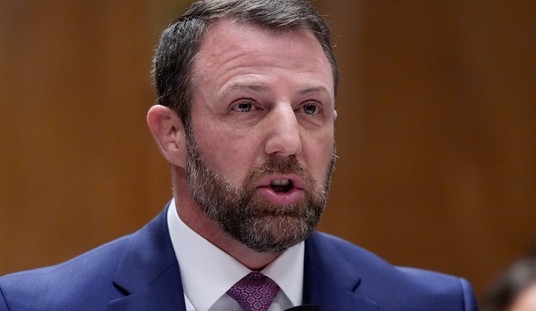
So they seek to tightly regulate the private use of toxin detection devices. Falkenrath warned New York City’s Public Safety Committee, headed by Peter Vallone Jr., that unregulated private deployment of toxin detection devices could lead to false alarms that could trigger “massive emergency response with all sorts of problems.” Falkenrath proposed an overarching plan, with licensed users legally obligated to inform special units in case of positive readings, yadda, yadda, yadda.
Now, the disturbing thing about this is not that the government wanted to get involved. Protection, after all, should be government’s number one issue, and protection from terrorism high on that agenda. The disturbing thing is the how of it; there were other ways of approaching the issue.
The city government could have approached the problems associated with detecting toxins not as a regulator, but as an organization that can add value to each individual’s personal and family and business security.
How? Instead of demanding that detectors be licensed, the city could offer to check detectors for a fee. And provide classes on how to use them, and how to communicate with various divisions of the government. In general, see the population not as cattle to be herded, but as both clients to serve and colleagues to co-operate with.
But regulation comes just so much quicker to certain types of mind, I guess.
Not surprisingly, when the folk who do most of today’s testing became alarmed, the commissioner insisted — against all current evidence — that “unless the police can determine who gets to look for nasty stuff floating in the air, the city would be paralyzed by fear.”
At a public meeting it was noted that after 9/11, when the EPA said the air in the neighborhoods surrounding Ground Zero was safe, it was privately held detectors that proved the EPA wrong. The commissioner did a little hemming and hawing.
But when asked if the city really had to put unlicensed detector users in jail, the bozo said yes.
Not surprisingly, the feds are partly to blame for this. They are the ones who pushed Falkenrath and the city to “investigate” the “problem” of unlicensed toxin detectors. Hint hint.
And yet the top-of-the-line toxin detectors — technology so expensive we can’t expect individuals or businesses to buy them — are still not being distributed around the country with anything like all necessary haste, despite ballooning budgets in Homeland Security. (Perhaps the bureaucrats there are still spending money on conferences in Hawaii.)
While we worry about furiners coming to our shores to spew germs and poisons, visiting anthropologists might better explain our politicians’ over-reactions than we can ourselves. They might note how fear of panic is itself a kind of panic. And how useful it is to maintain the herd.
Remember: Fear is the great weapon of tyrants everywhere, their usual excuse to undermine freedom.
Sometimes — indeed, even in this case — we have the most to fear not from our enemies but from our leaders cleverly pushing fear of fear itself.





Join the conversation as a VIP Member