



WASHINGTON -- It is a very conventional bit of political wisdom that successful presidential candidates appeal to their base in the primaries and sidle toward the center in the general election. In fact, neither of the last two presidents won in this fashion.
In the Democratic wilderness years following Mondale and Dukakis, Gov. Bill Clinton labored for the ideological renovation of his party, emphasizing education reform and job training, economic growth and expanded trade, reform to make welfare "a second chance, not a way of life," law and order, and mainstream moral values. From 1990 to 1991, Clinton was the chairman of the Democratic Leadership Council (DLC) -- the institution most closely identified with pro-business, Democratic centrism.
Many Democrats resisted this makeover, preferring the orange shag and avocado appliances of unreconstructed liberalism. Jesse Jackson, at one point, dismissed the DLC as "Democrats for the Leisure Class." Sen. Howard Metzenbaum founded the Coalition for Democratic Values to spark a fundamentalist, Democratic counterreformation.
In 1998, another reform-minded Southerner, George W. Bush, was re-elected governor of Texas with 68 percent of the vote on a platform of "compassionate conservatism" -- at the same time Gingrich-Armey, government-shutdown Republicanism was taking a national beating. Bush was the most prominent Republican advocate of education reform that benefited minority children, inclusive immigration policies and community and faith-based answers to social problems such as addiction and homelessness.
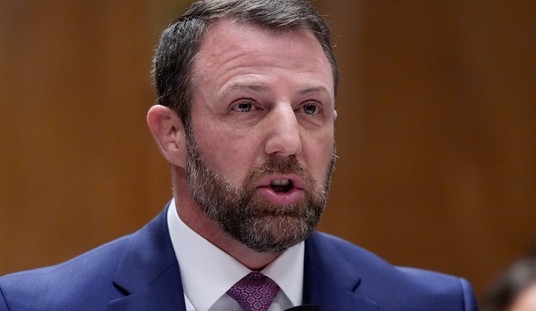
In his first policy address as a presidential candidate, Bush attacked the notion that "if government would only get out of our way, all our problems would be solved -- an approach with no higher goal, no nobler purpose, than 'Leave us alone.'" One conservative publicly complained the speech could have been written by someone "moonlighting for Hillary Rodham Clinton." Having had something to do with Bush's speech, I believed that only this kind of early, ideological shock treatment could shift a durable Republican image of heartlessness.
Whatever you think of Bill Clinton and George W. Bush, both earned a reputation for centrism by taking difficult political stands during (and before) the nomination process. While remaining orthodox on many key issues, each candidate contributed a new intellectual theory to his party. And they forced Democratic and Republican ideologues to swallow a horse pill of centrism in the cause of victory.
Barack Obama is now making his head-snapping shift to the center precisely because he rejected the Clinton-Bush approach. During the primaries, Obama could hardly be called innovative. His main policy appeals -- higher taxes, the "renegotiation" of NAFTA, the filibuster of FISA to block "retroactive immunity to telecommunications companies," public financing of presidential elections, a precipitous withdrawal from Iraq, unconditional talks with every world dictator -- were indistinguishable from those of many Net-roots bloggers. But while America is less Republican than it used it to be, it remains a center-right country. And so Obama has shifted, trimmed or retreated on nearly every issue that won him the nomination -- trying to compress a lifetime of moderation into a fortnight.
All this requires its own kind of audacity. As Obama explained of his NAFTA switch, "Sometimes during campaigns the rhetoric gets overheated and amplified." There is a broad wink in this admission -- a signal to the political class that Obama gets the political game. And commentators who buy the conventional wisdom -- that all politicians excite the base, then move to the center -- find these shifts expected, even impressive. They supposedly demonstrate a kind of political and mental toughness -- the unsentimental skills of a poker player, which might come in handy during negotiations with the Russians or Chinese.
There are many excuses for political opportunism, but it is not a virtue, because it eventually multiplies cynicism. And it may not even be a political advantage for a candidate who has made post-partisan idealism -- rather than a policy vision -- the centerpiece of his campaign. As Mitt Romney demonstrated in the Republican primaries, a strategy that smacks of cynicism can become a public image, which can overwhelm a strategy.
I do not believe that Obama is merely a chameleon. His outreach to religious Americans is innovative and could be transformational within his party. His political success has sidelined the irresponsible, Sharpton-like wing of the civil rights establishment, which is an achievement.
But it is hard to avoid the feeling that Obama has gained the nomination without fully earning it. Unlike Clinton or Bush, his intellectual contributions have been slight. The wave he rides may take him far -- but he is not determining its direction.








Join the conversation as a VIP Member