



The one goal that unites and explains the Democratic approach to foreign policy is this: America must try -- urgently and desperately -- to be more popular in the world.
"The world was with us after 9/11," explains Hillary Clinton. "We have so squandered that goodwill and we've got to rebuild it." Barack Obama has said that the "single most important issue" of the current election is picking a leader who can "repair all the damage that's been done to America's reputation overseas."
This argument depends on three premises -- all of which are questionable.
First, listening to the Democrats, one would assume that America in the Bush era is universally despised. The reality is more complicated.
According to the Pew Global Attitudes Project, the United States is very popular in sub-Saharan Africa, where President Bush has just finished a triumphant tour. (People in Kenya, Ivory Coast and Ghana have a more favorable view of America than Americans do.) India and Japan are strongly pro-American. America remains popular in parts of "new Europe" as well as in Mexico, Peru and even Venezuela -- though there has been some erosion in both Latin America and Europe in recent years.
Pew's general conclusion is that anti-Americanism has grown "deeper but not wider." And it is deepest in "old Europe" and the broader Middle East.
The second premise of this Democratic argument is that American popularity in these regions could be increased, easily and permanently, by overturning Bush policies.
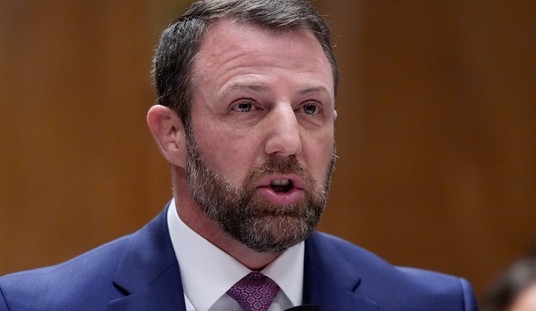
It is worth noting that American relations with European governments have rebounded strongly in the past few years with the election of Angela Merkel in Germany and Nicolas Sarkozy in France. And the next president, Republican or Democrat, is likely to close Guantanamo and sign legislation to restrict American carbon emissions, mollifying two justified European criticisms.
Yet the tensions between American and European worldviews ultimately have little to do with specific policies. Europe is an increasingly pacifist continent -- which is an improvement upon its bloody history but a source of inevitable tension with a superpower that must occasionally enforce world order. European governments generally view international institutions as a way to constrain American power. Any future American president will continue to view those institutions as a way to amplify our influence in keeping the peace.
And the broader Middle East is an even more difficult case. A close look at the Pew poll shows that appeasing public opinion in this region would require not merely leaving Iraq but also leaving Afghanistan, abandoning the war on terror and ending our support for Israel.
The third premise of the Democratic argument is that global popularity translates directly into global influence. Here the historical evidence is thin.
Few American presidents have enjoyed a warmer embrace than John Kennedy visiting France in June of 1961. French newspapers swooned at the first lady's perfect French and the better Parisian shops sold silk scarves embroidered "Jackie." But President Charles de Gaulle remained more interested in the cultivation of French self-esteem than in transatlantic unity. Having withdrawn the French Mediterranean fleet from NATO in 1959, he later ordered the removal of NATO troops from French soil. President Lyndon Johnson (in one of his finest hours) instructed his secretary of state to ask de Gaulle: "Does your order include the bodies of American soldiers in France's cemeteries?"
Few American presidents have been more reviled in Europe than Ronald Reagan, who responded to the Soviet deployment of SS-20 nuclear missiles by deploying Pershing II nuclear missiles. In West Germany, millions of people marched in protest. American soldiers were surrounded by hostile demonstrators shouting, "We don't want you in our country." But Reagan's unpopular "cowboy" determination helped end the Cold War and lift the nuclear threat from Europe.
And we have seen a good example in our time. The January 2007 decision to surge American troops in Iraq was clearly at odds with world opinion. But retreating from Iraq in failure would have earned global contempt for American weakness instead of global popularity. And the turnaround in Iraq has restored at least some of our standing and leverage in the Middle East.
The real lesson in the years since Sept. 11 is different from what the Democratic candidates imagine: It is easy to be loved when you are a victim. It is harder to be popular when you act decisively to protect yourself and others.
A successful president should strive for America to be liked -- and expect, on occasion, for America to be resented in a good cause.







Join the conversation as a VIP Member