










It's an old story. Loving parents provide a generous environment for their offspring. Kids are given not only ample food, clothing and shelter, but the emotional necessities as well: encouragement, discipline, self-reliance, the ability to work with others and on their own. And yet, in due course, the kids rebel. Some even say their parents never loved them, that they were unfair, indifferent, cruel. Often, such protests are sparked by parents' refusal to be even more generous. I want a car, demands the child. Work for it, insist the parents. Why do you hate me? asks the ingrate.
Of course, being an old story doesn't make it a universal one. But the dynamic is universally understood.
We've all witnessed the tendency to take a boon for granted. Being accustomed to a provision naturally leads the human heart to consider that provision an entitlement. Hence the not-infrequent lawsuits from prison inmates cruelly denied their rights to cable TV or apple brown betty for desert.
And so it goes, I think, with capitalism generally.
Capitalism is the greatest system ever created for alleviating general human misery, and yet it breeds ingratitude.
People ask, "Why is there poverty in the world?" It's a silly question. Poverty is the default human condition. It is the factory preset of this mortal coil. As individuals and as a species, we are born naked and penniless, bereft of skills or possessions. Likewise, in his civilizational infancy man was poor, in every sense. He lived in ignorance, filth, hunger and pain, and he died very young, either by violence or disease.
The interesting question isn't "Why is there poverty?" It's "Why is there wealth?" Or: "Why is there prosperity here but not there?"
At the end of the day, the first answer is capitalism, rightly understood. That is to say: free markets, private property, the spirit of entrepreneurialism and the conviction that the fruits of your labors are your own.
Recommended
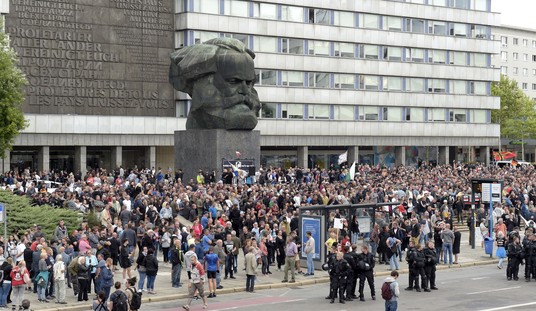
For generations, many thought prosperity was material stuff: factories and forests, gold mines and gross tons of concrete poured. But we now know that these things are merely the fringe benefits of wealth. Stalin built his factories, Mao paved over the peasants. But all that truly prospered was misery and alienation.
A recent World Bank study found that a nation's wealth resides in its "intangible capital" - its laws, institutions, skills, smarts and cultural assumptions. "Natural capital" (minerals, croplands, etc.) and "produced capital" (factories, roads, and so on) account for less than a quarter of the planet's wealth. In America, intangible capital - the stuff in our heads, our hearts and our books - accounts for 82 percent of our wealth.
Any number of countries in Africa are vastly richer in baubles and soil than Switzerland. But they are poor because they are impoverished in what they value.
In large measure our wealth isn't the product of capitalism, it is capitalism.
And yet we hate it. Leaving religion out of it, no idea has given more to humanity. The average working-class person today is richer, in real terms, than the average prince or potentate of 300 years ago. His food is better, his life longer, his health better, his menu of entertainments vastly more diverse, his toilette infinitely more civilized. And yet we constantly hear how cruel capitalism is while this collectivism or that is more loving because, unlike capitalism, collectivism is about the group, not the individual.
These complaints grow loudest at times like this: when the loom of capitalism momentarily stutters in spinning its gold. Suddenly, the people ask: What have you done for me lately? Politicians croon about how we need to give in to Causes Larger than Ourselves and peck about like hungry chickens for a New Way to replace dying capitalism.
This is the patient leaping to embrace the disease and reject the cure. Recessions are fewer and weaker thanks in part to trade, yet whenever recessions appear on the horizon, politicians dive into their protectionist bunkers. Not surprising that this week we saw the demise of the Doha round of trade negotiations, and this campaign season we've heard the thunder of anti-trade rhetoric move ever closer.
This is the irony of capitalism. It is not zero-sum, but it feels like it is. Capitalism coordinates humanity toward peaceful, productive cooperation, but it feels alienating. Collectivism does the opposite, at least when dreamed up on paper. The communes and collectives imploded in inefficiency, drowned in blood. The kibbutz lives on only as a tourist attraction, a baseball fantasy camp for nostalgic socialists. Meanwhile, billions have ridden capitalism out of poverty.
And yet the children of capitalism still whine.


Join the conversation as a VIP Member