



Last week, White House chief economist Christina Romer told reporters that there are "billion-dollar bills lying on the sidewalk" in America's health care system -- apparently there for the taking if only Washington would show the will to pick them up.
As a presidential candidate and now as president, Barack Obama has promised both universal access to health care and big savings to taxpaying households. That doesn't make a lot of sense because usually when you buy more of something, the price tag increases, but Washington seems not to have noticed.
There's a circular logic to the illogical proposition. Obama's Council of Economic Advisers (headed by Romer) issued a report on June 2, "The Economic Case for Health Care Reform," that concluded: "The central finding of this report is that genuine health care reform has substantial benefits." You have to marvel at the ability of political staffers to congratulate themselves on great successes even before their plan has been adopted.
The report does a fine job of outlining the arguments in favor of containing health care costs. Every year, the rise in these costs eats more out of workers' paychecks. For some readers, premium inflation means that their take-home pay cannot keep pace with inflation and thus they are effectively suffering a pay cut. To make matters worse, many employees also are paying higher co-payments for health care. Obviously, if Obama can put the brakes on this runaway health cost train, workers, employers and taxpayers will benefit.
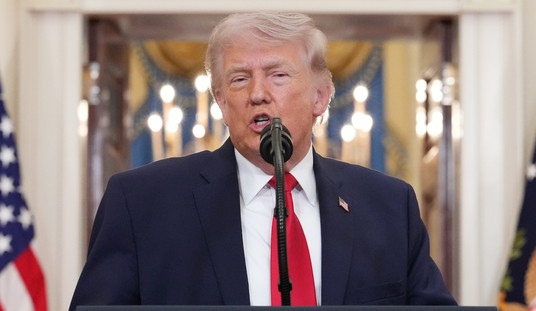

But can he make health care universal -- that is, expand health care coverage to more Americans -- and still save taxpayers money without cutting back on the level of care that most Americans now enjoy?
The president's economists cited a Dartmouth Medical School study that suggests "nearly 30 percent of Medicare costs could be saved without adverse health consequences." I cannot help but suspect that if economists working for President George W. Bush talked up such economies, headlines would scream: "Bush To Slash Medicare."
And there would be stories quoting fed-up lifelong Republicans turning on the GOP. There also would be a few sneers about Obamaspeak -- including the report's suggested strategy of "creating financial incentives for patients needing complex surgeries to use high quality, lower total cost 'centers of excellence.'"
Sure, the new crew means well. Team Obama wants to save families money and make sure everyone has health care. But it's hard to be impressed at the promise for the government to provide universal health care -- because it's a moral imperative, not so morally vital that most Americans should have to pay for it.
Leading Democrats in Congress now are talking about how to pay for the $1.2 trillion cost of universal care over 10 years. It looks as if Obama will have to let go of his 2008 opposition to taxing employer-paid health premiums. Bottom line: Expanded health care won't be free. Meanwhile, it's the economists -- as opposed to politicians -- who tout rosy scenarios as they suggest that the Obama plan, and the health industry's so-called pledge to curb cost increases by 1.5 percent annually, could save a typical family of four $2,600 in 2020.
Only a Washington economist can argue with a straight face that providing quality health care to 46 million Americans who are now uninsured and assert it will save "between $75 billion and $125 billion per year."
Folks, that's how government and deficits keep getting bigger.






Join the conversation as a VIP Member